

Project Management Software Advertising Case Study


About
TaskRay
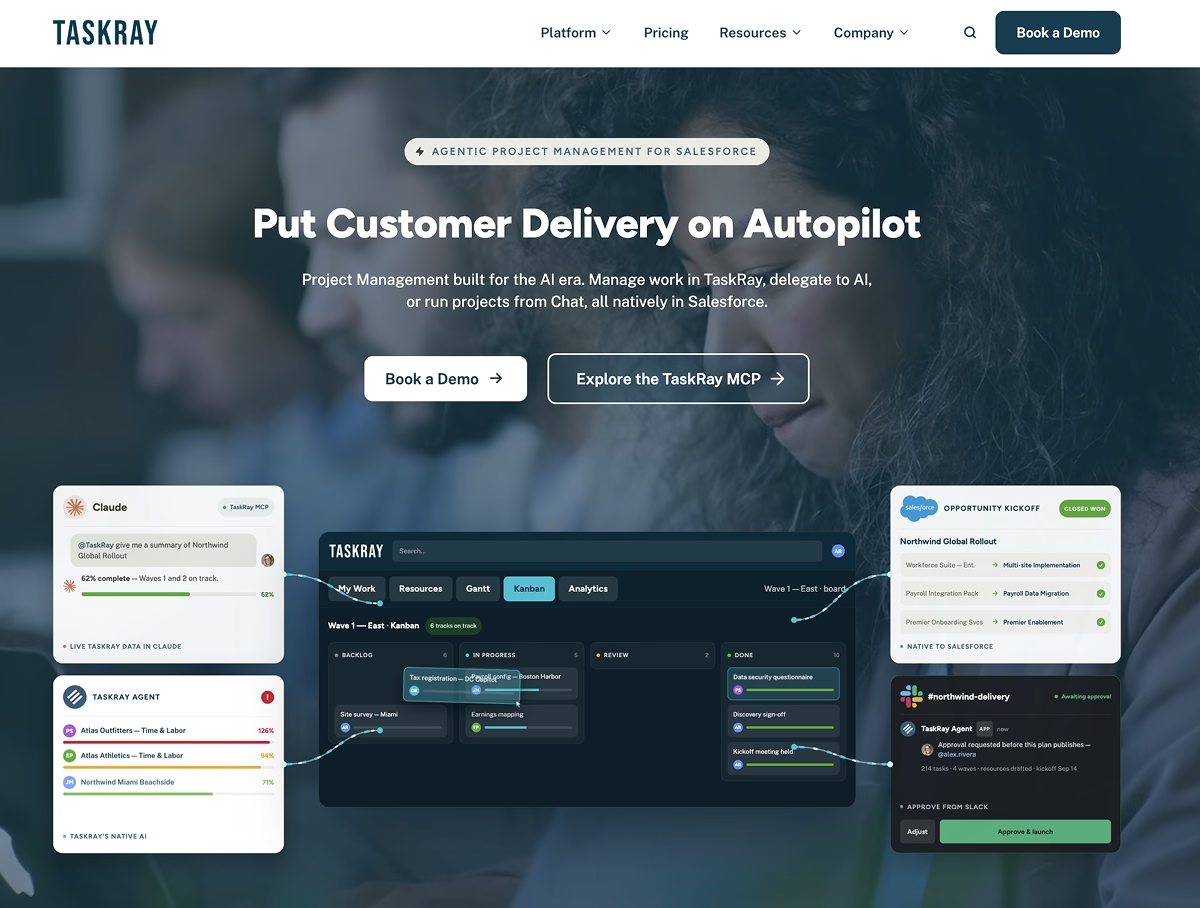
TaskRay is a Salesforce-native project management, task management, and customer onboarding application used by more than 1,000 Salesforce customers.
The product requires a minimum of 10 licenses, with contracts worth roughly $40,000 per year. With that enterprise ACV and a long, multi-touch buying process, lead quality matters more than raw lead volume.
That meant TaskRay needed a coordinated multichannel strategy focused on qualified pipeline, so they brought InterTeam in to build it from the ground up.
The results were impressive:
- 86 booked demos directly attributed to Google Ads
- $1,241,722 in paid-influenced opportunity value across 43 recent new-business deals
- $604,232 in paid-influenced opportunity value that the CRM had not credited to paid media
In this advertising attribution case study, we break down the cross-channel strategies behind these results and how a later CRM audit revealed more paid influence than TaskRay’s reporting showed.
Why TaskRay Chose InterTeam
Enterprise SaaS sales cycles are often long and complex. Buyers interact with ads across several platforms before becoming qualified opportunities. If those channels and their data are managed separately, it becomes difficult to see what is driving pipeline or scale campaigns efficiently.
TaskRay knew it needed a top SaaS PPC agency and prioritized an agency with experience promoting a native CRM application and connecting campaign data with HubSpot and Salesforce. That led them to InterTeam.
During their research, they discovered our case study in which we helped Pimly 5x their ROI in just two months. Pimly is another Salesforce-native SaaS company with a similarly narrow audience, so the campaign showed TaskRay that we understood their market.
That relevant experience led TaskRay to reach out. We then got started with a complete Google Ads account audit and a strategy tailored to their existing problems.
Our Game Plan: A Multichannel PPC Strategy Targeting Salesforce Users
As part of our pitch, we reviewed TaskRay’s existing Google Ads account, its website, and the path from ad click to conversion.
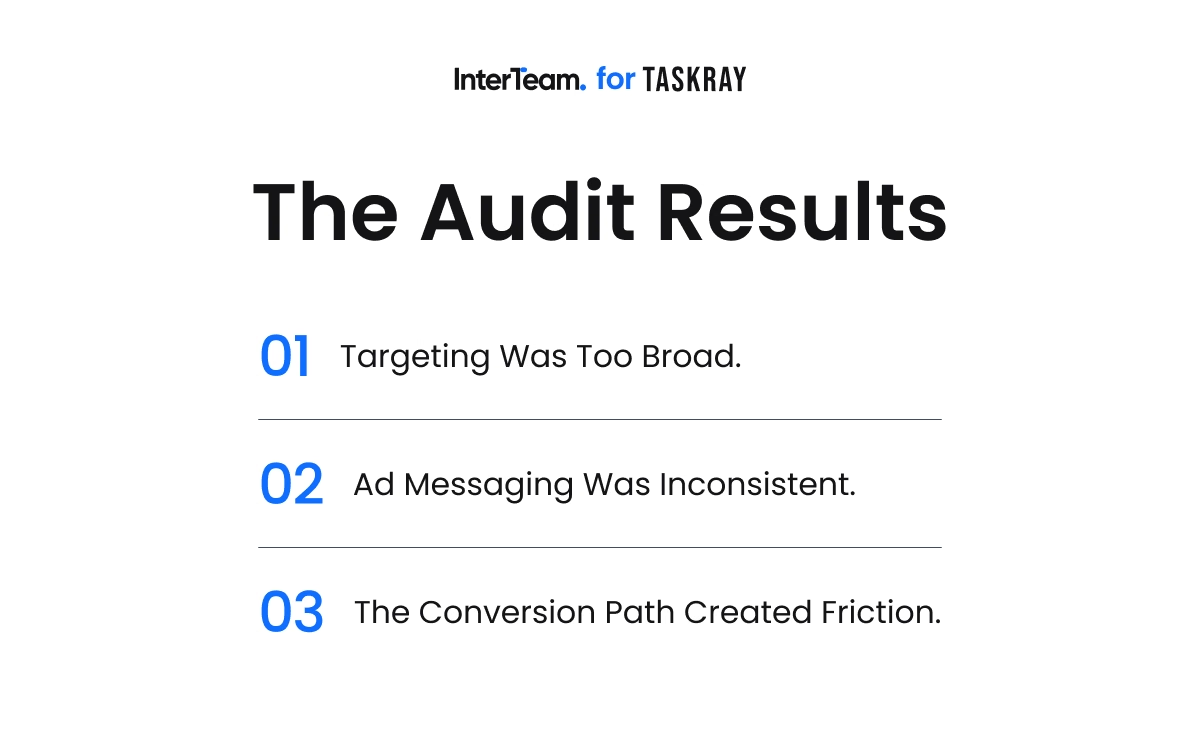
The audit identified three main problems:
- Targeting was too broad. Much of the account’s spend targeted general project management keywords that were not Salesforce focused and competitor searches that attracted low-quality clicks.
- Ad messaging was inconsistent. Headlines were not pinned correctly, allowing calls to action or duplicate branded copy to appear before TaskRay’s value proposition.
- The conversion path created friction. Website speed and conversion-rate issues limited performance even when the campaigns attracted qualified traffic.
These findings dictated our direction. We proposed rebuilding their Google Ads strategy around Salesforce-specific keywords, making TaskRay’s Salesforce-native positioning clear across its ad copy, and improving the landing-page experience.
Then, to create a multi-touch strategy, we proposed expanding to LinkedIn and Reddit. Google captured active demand, while LinkedIn and Reddit reached and retargeted the same buyers across other platforms they used during the research process.
Together, those channels became the foundation of TaskRay’s multichannel campaign.
Phase 1: Launching Google, LinkedIn, and Reddit Ads
The first phase of our strategy involved the launch of Google, LinkedIn, and Reddit Ads. We launched all three platforms together in October 2025.
Google Ads: Capturing Salesforce-Specific Demand
Why We Used It
At launch, Google was our primary channel for capturing demand. It offered the clearest path to buyers already searching for Salesforce-native project management, task management, and customer onboarding software.
The strategy was to move away from generic project management keywords and focus on searches that included “Salesforce.”
What We Ran
Someone searching for generic project management software was still comparing the broader category. Instead, we focused on searches that included “Salesforce” to prequalify the traffic by reaching buyers who had already decided they wanted their project management software to work inside Salesforce.
For this reason, we built the account around five distinct Google Ads strategies:
- Branded search campaigns: Reaching buyers already searching for TaskRay by name. Important because competitors were bidding aggressively on their brand name.
- Core Salesforce search campaigns: High-intent queries related to Salesforce project management, task management, and customer onboarding software or app searches.
- AppExchange campaigns: Searches from buyers looking for Salesforce applications and AppExchange solutions.
- Competitor and comparison campaigns: Alternative and comparison searches that indicated active product evaluation rather than bidding on every competitor query.
- Retargeting and creative campaigns: Middle- and bottom-of-funnel Display and Demand Gen campaigns using image, HTML5, and video creative to reach people who had already interacted with TaskRay.
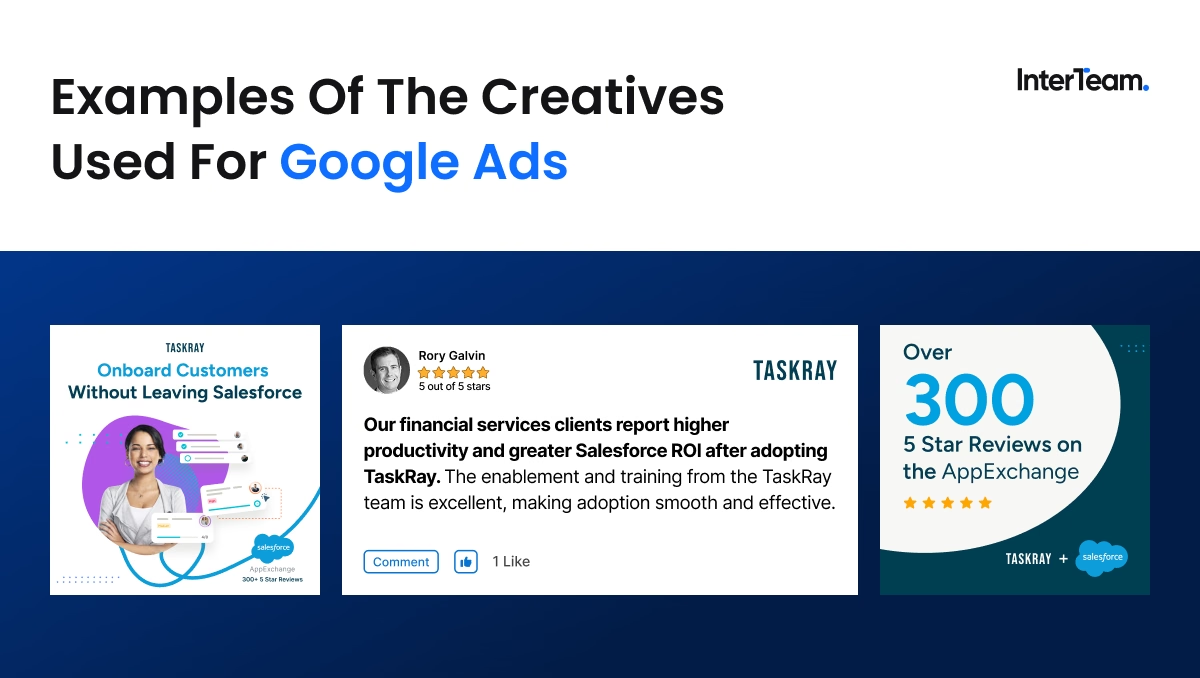
Across the search campaigns, we applied our broader B2B Google Ads process. We pinned keyword-optimized, product-specific headlines in the first position to improve ad relevance. We also reviewed search terms regularly, expanded negative keyword coverage, and split ad groups to improve Quality Scores.
Google Ads Results
Google became the strongest source of directly attributed booked meetings in the account.
Our results included:
- 86 booked demos
- 84 HubSpot MQLs
Branded search was the strongest-performing unit in the account, with a 19.93% click-through rate. Impression share on TaskRay’s primary branded keyword reached 97.81%.
LinkedIn Ads: Reaching Buyers and Salesforce Sellers
Why We Used It
Google captured existing search demand, but TaskRay also needed to reach relevant buyers before they searched. LinkedIn Ads gave us direct access to the job titles, companies, industries, and Salesforce professionals most likely to influence a TaskRay purchase.
Beyond end buyers, we used LinkedIn to advertise directly to Salesforce sellers. We wanted TaskRay to come to mind when a Salesforce Account Executive or Solution Engineer encountered a customer struggling with onboarding or project delivery.
LinkedIn retargeting also suited TaskRay’s long sales cycle. It allowed us to continue the conversation without assuming every prospect was ready to book a demo after one interaction.
What We Ran
In total, we ran three main campaign types on LinkedIn:
- Retargeting Conversation Ads: Campaigns sent from a named person to people who had visited high-intent pages within the previous 90 days.
- Content and lead-generation campaigns: Thought Leadership and Document Ads promoting case studies and lead magnets related to onboarding and deferred revenue.
- Account-based targeting campaigns: Targeting high-intent roles at selected financial services companies.
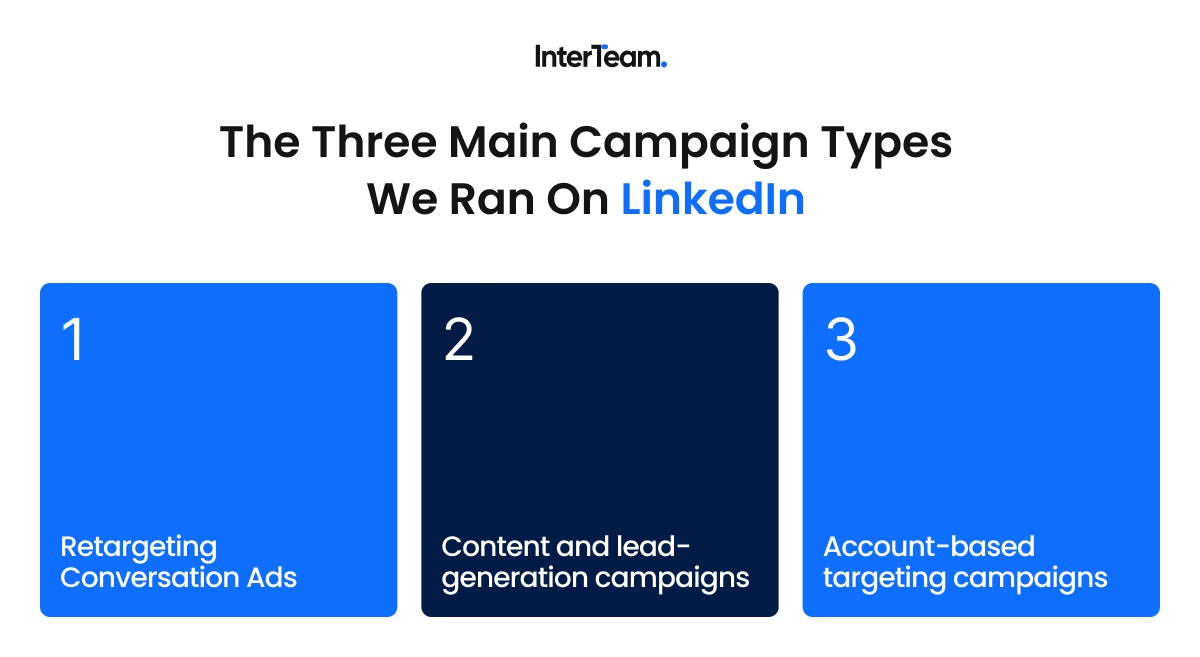
Retargeting Conversation Ads were the strongest-performing LinkedIn strategy for TaskRay. Across these campaigns, we also tested Spotlight, Text, Carousel, and Video formats, along with “us vs. them” comparison messaging.
LinkedIn Ads Results
LinkedIn produced the highest volume of platform-recorded conversions, but its results also showed why platform data alone was not enough.
Results included:
- 337 platform-recorded conversions
- 23 HubSpot MQLs
The difference between the platform and HubSpot results showed why platform data alone did not provide a complete picture of LinkedIn’s performance.
Reddit Ads: Targeting Salesforce Communities
Why We Used It
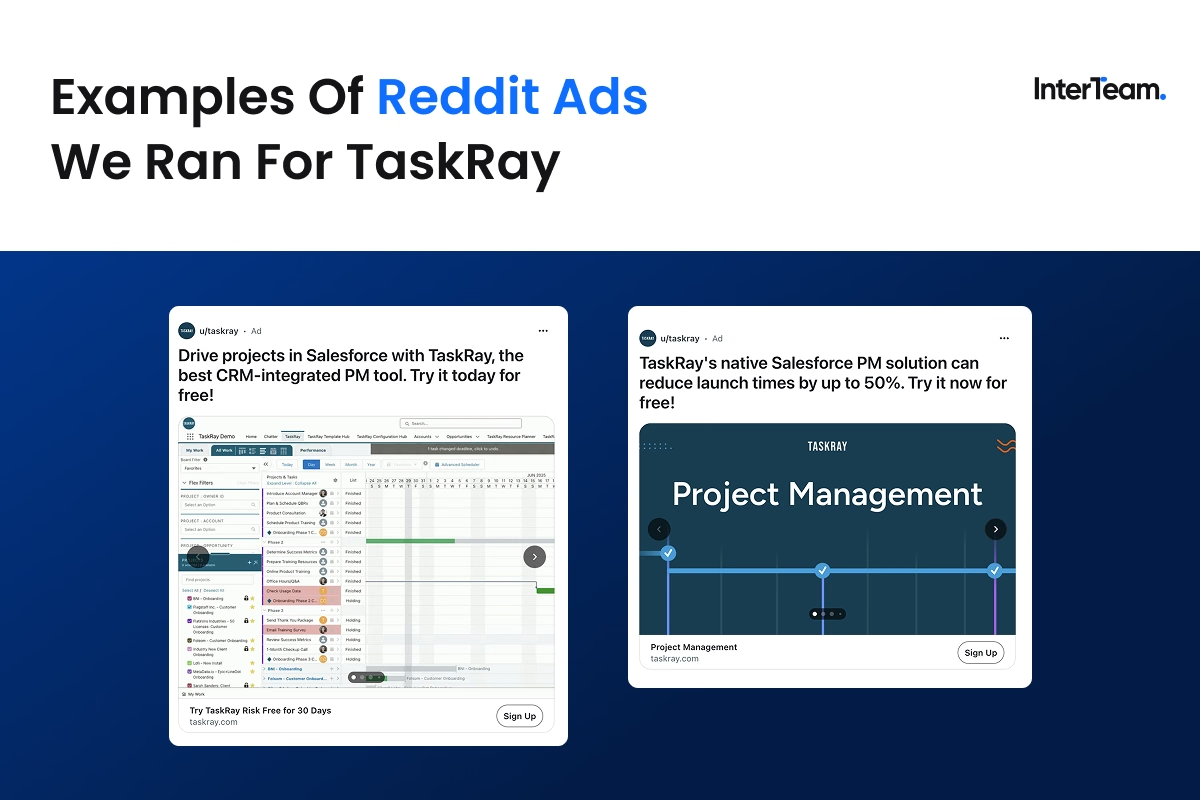
Reddit Ads gave us a different way to reach Salesforce users. Instead of targeting people through search queries or job titles, we advertised directly within practitioner communities they engaged with, such as r/salesforce, r/salesforceadmin, and r/SalesforceDeveloper.
We tested Reddit as a lower-cost channel for reaching Salesforce users who already understood the problems TaskRay solves.
The goal was to determine whether that engagement produced qualified pipeline.
What We Ran
In total, we tested three main campaign types on Reddit:
- Salesforce community campaigns: Prospecting within communities for Salesforce users, administrators, and developers.
- Adjacent-interest campaigns: Tests across project management and customer success communities.
- Retargeting and modeled-audience campaigns: Follow-up campaigns based on website activity and CRM audiences such as MQLs and SQLs.
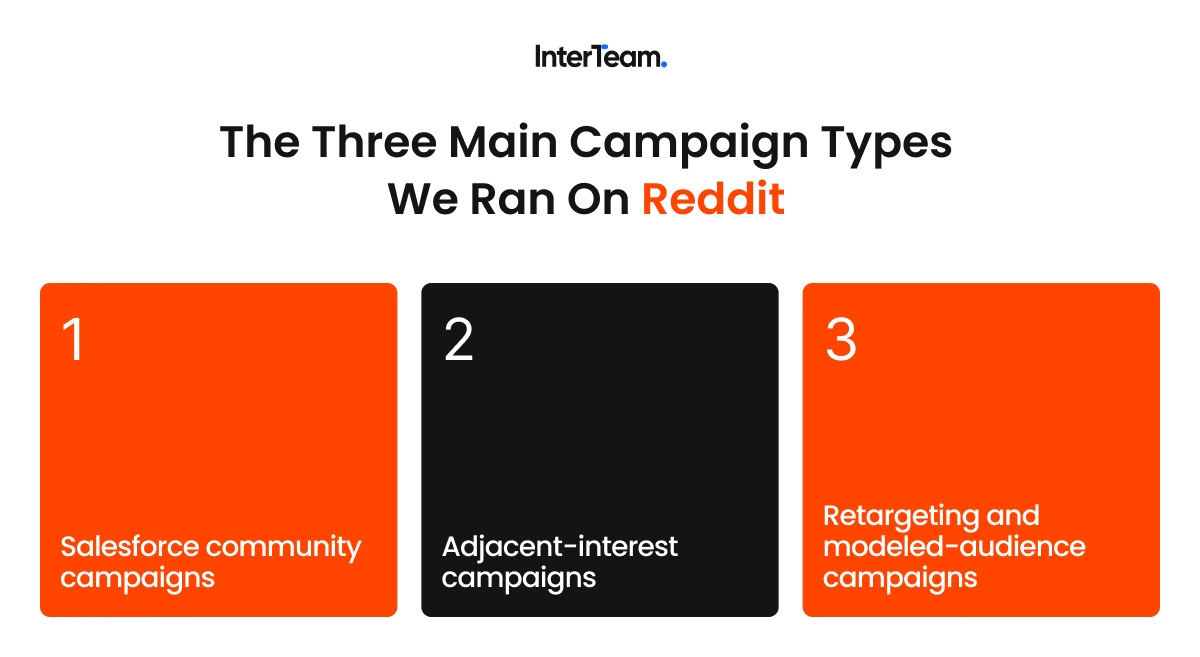
Across these campaigns, we tested image, video, carousel, and conversation placements.
Reddit Ads Results
Reddit generated 55 platform-recorded actions, including:
- 36 sign-ups
- 19 demo lead-form submissions
Although we have generated strong results with Reddit Ads for other B2B SaaS companies, including a 6x increase in ROAS for Rise Vision, the channel did not generate qualified pipeline efficiently for TaskRay. We paused it in April 2026 to scale budget into the channels that were producing pipeline.
Phase 2: Expanding With Microsoft and ChatGPT Ads
After the initial rollout, we expanded the Salesforce-focused search strategy into Microsoft Ads and began testing ChatGPT Ads as a way to reach buyers during product research.
Microsoft Ads: Extending Salesforce-Specific Search Demand
Why We Used It
Google had already shown that Salesforce-specific search could generate qualified actions. Microsoft Ads gave us a channel to extend our search campaigns. Microsoft offers significantly lower CPCs than Google due to lower competition, so this allowed us to target the same types of buyers at a third of the cost.
What We Ran
We mirrored Google’s search structure in Microsoft Ads, launching the same campaigns that had been driving results on Google Ads.
The campaigns retained their own ad groups and negative keyword controls, allowing us to optimize Microsoft based on its own search data.
Microsoft Ads Results
Microsoft quickly became the best-value search channel in the account.
Results included:
- 22 leads
- 82% branded impression share
- Between 74% and 91% impression share across non-brand campaigns
Unlike Google, Microsoft had not reached saturation. Microsoft was already generating lower-cost leads and still had room to grow.
ChatGPT Ads: Reaching Buyers Inside Research Conversations
Why We Used It
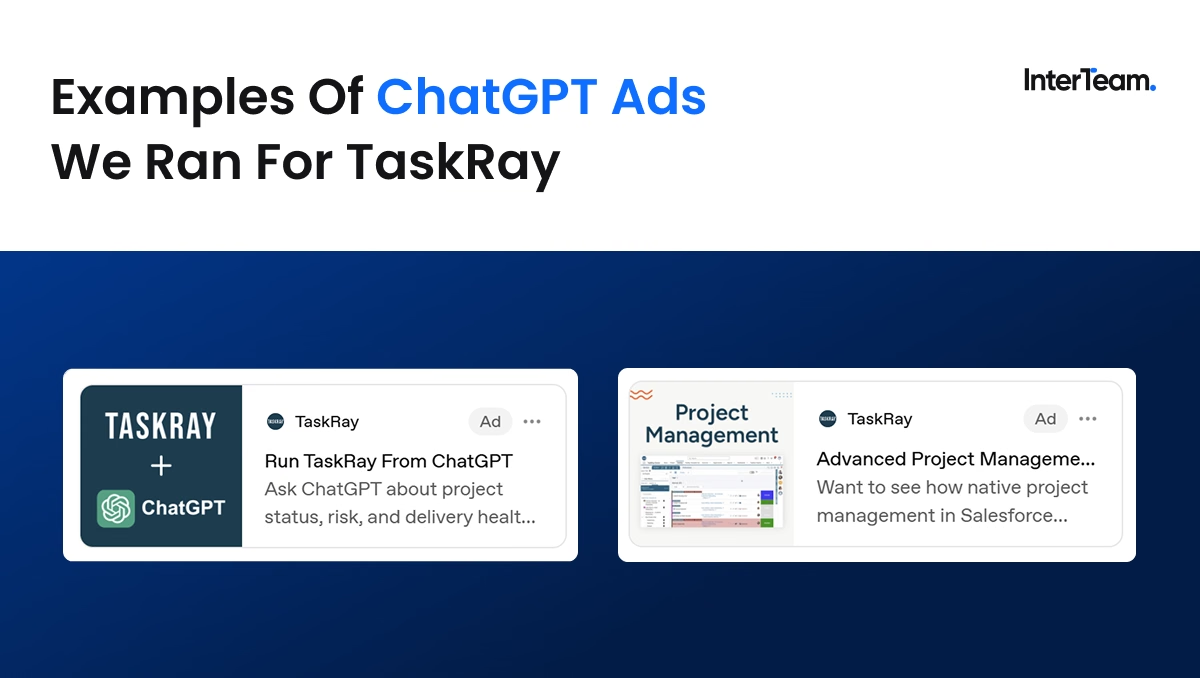
When OpenAI began rolling out its self-serve ChatGPT Ads Manager beta in May 2026, InterTeam was one of the first agencies invited to test it. We introduced ChatGPT Ads to TaskRay in June to reach B2B SaaS buyers while they were actively researching software.
Unlike Google Ads, the platform does not rely on keyword targeting. It uses Context Hints to match ads with relevant conversations, giving us a way to show up inside the research process.
What We Ran
At the time, there was very little established guidance on how to structure Context Hints or optimize campaigns, so we developed our approach through testing. We provide a full breakdown of those early findings in our ChatGPT Ads case study.
In total, we ran four main campaign types:
- Demo and product-research campaigns: High-intent conversations about Salesforce project management, task management, customer onboarding, and related use cases.
- Webinar and educational campaigns: Lower-friction offers for people researching project management problems or still learning about available solutions.
- Competitor and comparison campaigns: Conversations where buyers were comparing specific platforms or looking for alternatives.
- Branded campaigns: Conversations involving TaskRay reviews, product comparisons, and alternative solutions.
Across these campaigns, we tested different Context Hint lengths, campaign structures, and delivery schedules. Longer, more specific Context Hints performed best, while dayparting allowed us to focus delivery during working hours.
ChatGPT Ads Results
The clearest early advantage was cost. ChatGPT Ads reached TaskRay’s buyers at a fraction of what clicks cost on Google and LinkedIn.
- 31 platform-recorded conversions
- CPC approx. 75% lower than Google
While the campaigns are still new, they show that ChatGPT Ads reach TaskRay’s buyers efficiently during product research.
Phase 3: Optimizing the Funnel and Uncovering Missing PPC Attribution
By July, TaskRay was generating its highest lead volume, but booked meetings had not increased at the same rate.
LinkedIn made the disconnect especially clear. It produced the most platform-recorded conversions, yet its booked-meeting conversion showed zero even when HubSpot recorded LinkedIn leads, MQLs, and opportunities.
Before making further budget decisions, we needed to determine whether the problem was lead quality, the conversion path, or attribution.
Investigating the Gap Between Leads and Meetings
We started by auditing the full conversion path. We reviewed whether the campaigns were reaching the right people and whether the offers, landing pages, and forms were moving them toward a meeting.
We also reviewed channel allocation and shifted focus toward campaigns producing the clearest down-funnel results. Even after these changes, standard reporting still did not show how paid activity was connected to the opportunities recorded in the CRM.
The problem was not just campaign performance. Paid influence was also being lost as contact data moved through TaskRay’s marketing and sales systems.
Attribution Issues From the HubSpot-Salesforce Integration
TaskRay’s HubSpot and Salesforce integration setup created several ways for attribution data to be lost or overwritten before an opportunity was created.
We found four recurring issues:
- Source data was overwritten or misclassified. The Salesforce sync replaced HubSpot’s Original Source, while cold leads imported from Salesforce entered HubSpot with an Offline source before converting.
- Deals failed to inherit contact data. Contacts contained clear paid-search evidence while associated deals remained labeled Offline, Organic, or blank.
- UTM data was fragmented. Multiple versions of the same UTM properties caused forms and integrations to write values to different fields.
- Campaign identifiers were lost. Forms and integrations failed to retain the UTM parameters and click IDs needed to trace an interaction back to an ad platform.
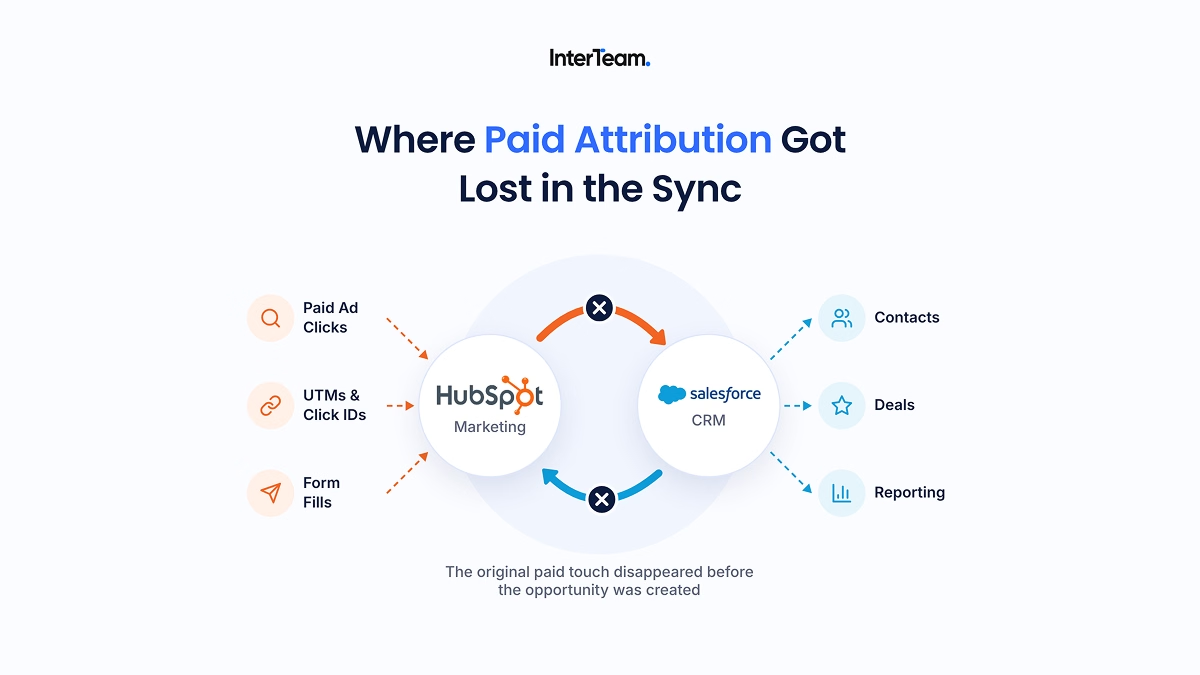
This matters because TaskRay’s sales cycle involves multiple touchpoints. When buyers clicked ads, returned through other channels, and later became associated with deals, HubSpot and Salesforce failed to preserve those relationships. The original paid interactions then disappeared from standard reporting.
We developed a repair plan to standardize source fields, preserve UTM parameters and click IDs, align the HubSpot and Salesforce mappings, and carry contact-level attribution into associated deals.
Uncovering $604K in Uncredited Opportunity Value
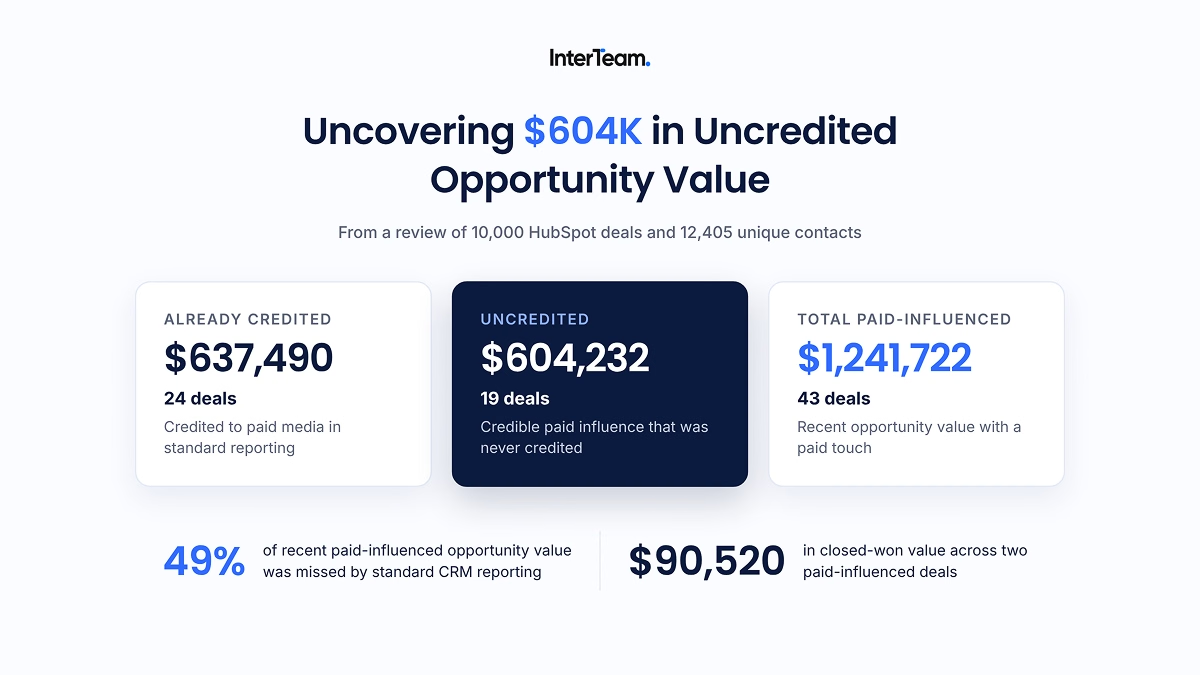
With these problems identified, we reviewed 10,000 HubSpot deals and 12,405 unique contacts to measure how much opportunity value standard reporting had missed.
To keep the attribution analysis conservative, we limited it to recent new-business activity. We excluded renewals, expansions, older relationships, and returning-customer clicks.
We counted an opportunity as paid-influenced only when its source, campaign, UTM data, or associated contact showed clear evidence of a paid search or paid social interaction. This did not prove that advertising caused the opportunity or deserved full credit for it. It only showed that a paid media touchpoint appeared in the contact or deal history.
The audit found:
- 24 deals worth $637,490 already credited to paid media.
- 19 deals worth $604,232 with credible paid influence that had not been credited.
- 43 deals worth $1,241,722 in total recent paid-influenced opportunity value.
Standard CRM reporting had missed approximately 49% of TaskRay’s recent paid-influenced opportunity value. The audit also identified $90,520 in closed-won value across two paid-influenced deals.
Final Results: $1.24M in Paid-Influenced Opportunity Value
During the reported period, we ran coordinated PPC campaigns across five paid media platforms. The attribution audit identified $1,241,722 in paid-influenced opportunity value across 43 recent new-business deals.
Each channel measured a different primary conversion based on its role in the sales cycle, so the results should be evaluated within each channel rather than compared directly.
- Google Ads: 86 booked demos and 84 HubSpot MQLs
- LinkedIn Ads: 337 platform-recorded conversions and 23 HubSpot MQLs
- Reddit Ads: 55 platform-recorded actions, including 36 sign-ups and 19 demo lead-form submissions
- Microsoft Ads: 22 leads
- ChatGPT Ads: 31 platform-recorded conversions with CPC approximately 75% lower than Google
Need Help With Paid Ads?
We help B2B SaaS companies build paid media strategies around qualified pipeline. For TaskRay, that meant coordinating campaigns across five platforms and uncovering $604,232 in paid-influenced opportunity value that its CRM had missed.
If your campaigns are generating conversions without a clear view of what becomes pipeline, we can help.
Book a free paid media strategy call.

Template question
Template text answer