Our Omnichannel Advertising Strategy (Revealed)
We recently helped a client 7x their leads while reducing cost per lead by 87% and generating $100,000 in opportunities within just three months. These numbers may seem crazy, but they’re true and we achieved these results through a well-coordinated omnichannel advertising strategy.
Following the success of this campaign and dozens of others like it, we decided to pull back the curtain and share the real approach behind the results.
In this guide, we break down our actual omnichannel advertising strategy and show how platforms like Google, Reddit, and LinkedIn work together to scale qualified lead generation, control costs, and drive real business growth.
What is Omnichannel Advertising?
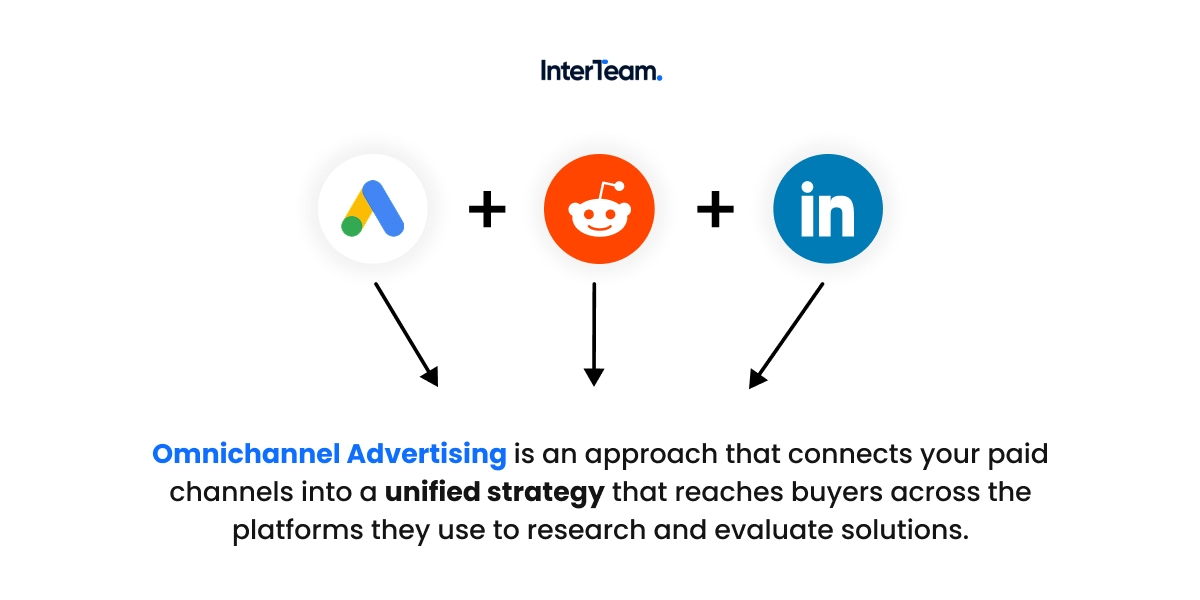
Omnichannel advertising is an approach that connects your paid channels into a unified strategy that reaches buyers across the platforms they use to research and evaluate solutions.
Rather than running ads on platforms independently, this approach aligns targeting, messaging, and customer data so each channel plays a specific role based on buyer intent.
When platforms are used deliberately and in the right sequence, they reinforce one another, resulting in more efficient campaigns, higher-quality leads, and lower overall costs per lead.
Choosing The Right Platforms For Each Stage of the Marketing Funnel
The first step in developing an omnichannel marketing strategy is determining the role of each platform at each stage of your funnel. This is especially important in industries with long, non-linear evaluation cycles, where you’ll require more touchpoints and overexposure on high-cost platforms can quickly eat away at profit.
For example, LinkedIn is an extremely high-intent platform, but it also comes with very high costs, with average CPCs almost 2x higher than Google Ads. We’ve found that bottom-of-funnel campaigns on LinkedIn tend to deliver strong conversion rates, making those higher CPCs worth the cost, but top-of-funnel campaigns can be less efficient due to lower conversion rates.
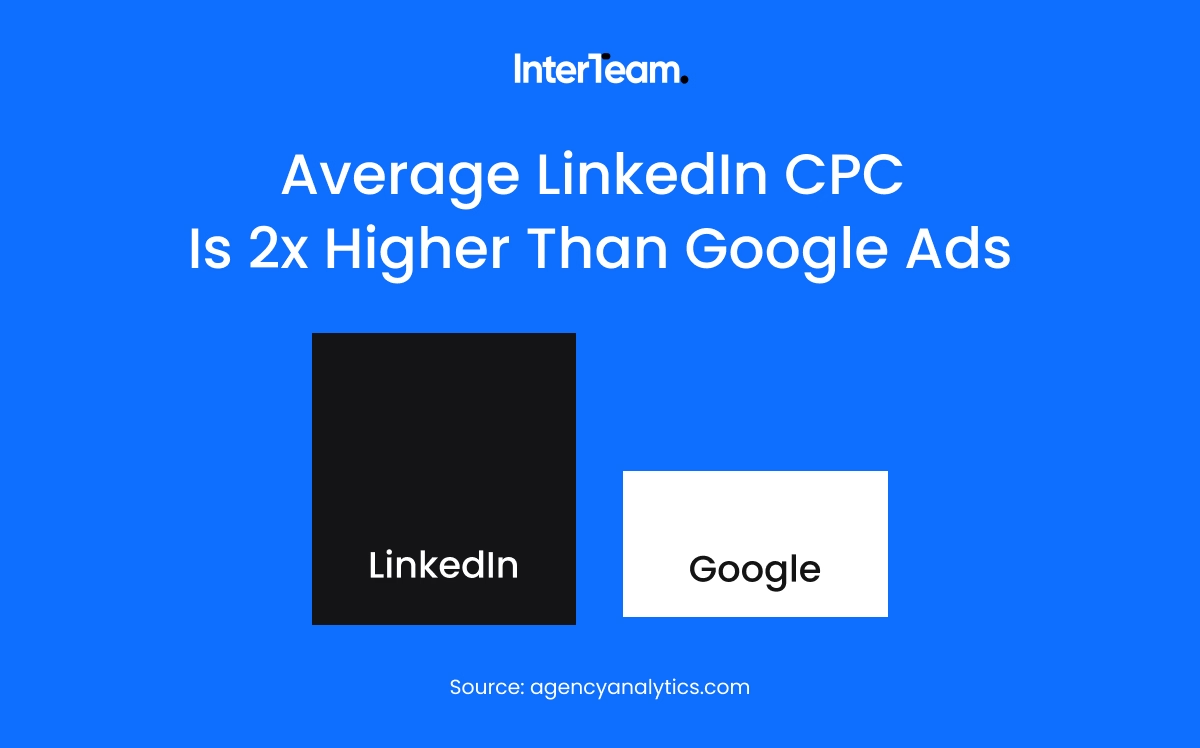
For this reason, rather than paying LinkedIn’s high CPCs to generate early-stage demand, we use more affordable platforms like Reddit to drive early-stage awareness and discovery. We then build retargeting audiences around high-intent website visitors, which we retarget with bottom-of-funnel LinkedIn campaigns.
This is how you scale efficiently while keeping costs down, and the same principle applies across every platform you use.
Effective omnichannel strategies concentrate budget in the channels generating real pipeline, while using supporting platforms to extend reach and reinforce primary conversion drivers.
Setting Up Omnichannel Data Integration
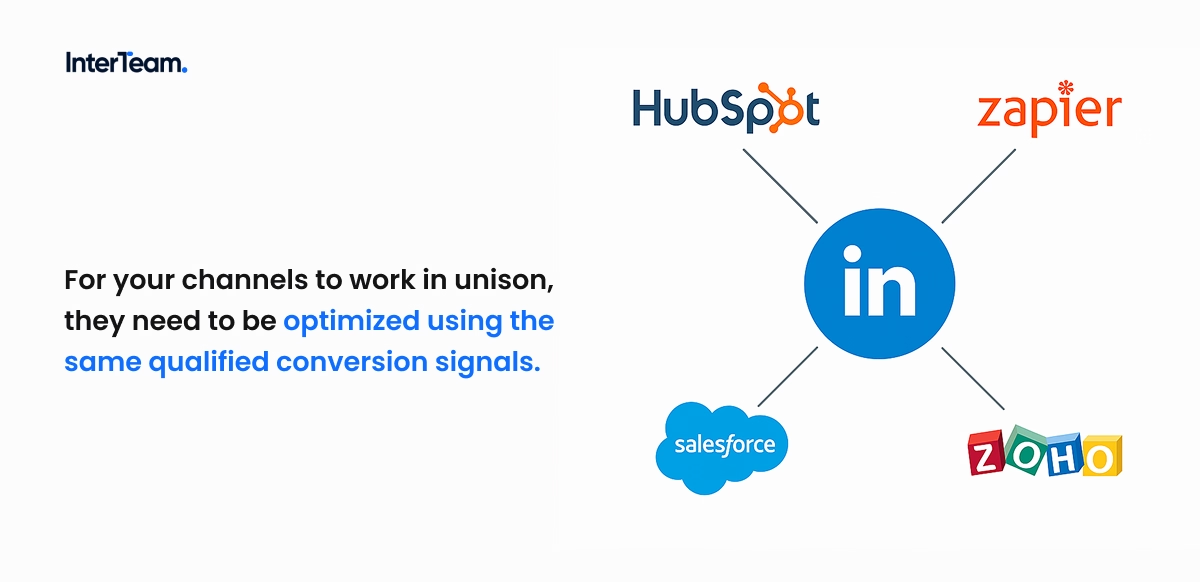
Cross-channel data integration is what sets an omnichannel strategy apart from a standard multichannel campaign. For your channels to work in unison, they need to be optimized using the same qualified conversion signals.
This starts with setting up your CRM to track leads and conversion events across platforms. Most advertising platforms have native integrations with Salesforce, HubSpot, and other CRMs, but if they don’t, you can create API integrations using apps like Zapier.
Once these CRM integrations are set up, qualified conversion signals are fed directly back into your advertising platforms, allowing campaigns to optimize toward your highest-quality leads.
We also set up platform pixels and conversions based on engagement with the website using Google Tag Manager, making sure that the triggers for these conversions are identical across all advertising accounts. We then use these triggers to optimize our campaigns and use the pixels to build identical audiences across all platforms.
These audiences are built based on triggers that indicate high purchase intent. Some examples of audiences that we usually build include:
- Visits to high-intent pages like pricing or demo pages
- At least 30 seconds spent on the website
- At least 50% scroll depth
These triggers help qualify leads that show clear interest, separating them from visitors who quickly bounce. These are the signals you want to send back to your advertising platforms, as sending unqualified leads will cause campaigns to optimize for low-quality traffic.
Finally, you want to set up your campaigns in a way that protects them from low-intent audiences and click fraud. This requires creating custom exclusion audiences for each platform that block your ads from obvious low-intent segments.
Some that we use include:
- Bots
- Visitors that bounce immediately
- Job seekers
- Current customers
- Employees
- Competitor employees
- Students
From there, you can use tools like ClickCease to protect your ads from harmful sources, bot clicks, and wasted budget.
Our Omnichannel Advertising Strategy
Now that our tracking and data integrations are properly set up, we can dive into our omnichannel advertising strategy. This is the real approach we use at InterTeam to scale lead generation, reduce CPL, and build a consistent, scalable pipeline for our clients.
At the core of our strategy is a channel mix built around intent tiers. Google is used to capture in-market buyers, LinkedIn allows us to target ICP decision-makers, and Reddit engages technical researchers while testing creative at lower CPCs.
While additional channels may be used to support broader goals, this three-channel foundation consistently produces the strongest results across the full spectrum of awareness, evaluation, and purchase intent.
Google Ads Strategy
Google Ads is at the heart of our omnichannel strategy because it captures demand at the exact moment buyers are searching for a solution. This level of intent is something no other paid advertising platform is able to replicate.
In our omnichannel approach, we use Google as our primary demand-capture channel, connecting with high-intent, in-market buyers while also using that search intent to guide performance across our other campaigns.
Below are the primary types of Google Ads campaigns our Google Ads Agency uses as part of our omnichannel strategy. For a more detailed breakdown, you can check out our Complete B2B Google Ads Guide.
Search Campaigns With High-Intent Keyword Targeting
With our Google search campaigns we try to optimize our budget on targeting high-intent keywords. Instead of chasing and wasting budget on keywords with the most volume, we focus on search terms that signal buyers are actively looking for our product or service.
To do this, we look for keywords that include high-intent qualifiers, such as “software,” “solution,” “app,” or “tool” for SaaS, and “services,” “firm,” or “agency” for service-based businesses.
For a deeper walkthrough of this process, our Google Ads keyword research guide explains how to identify high-intent terms, filter low-quality searches, and structure ad groups around buyer intent.
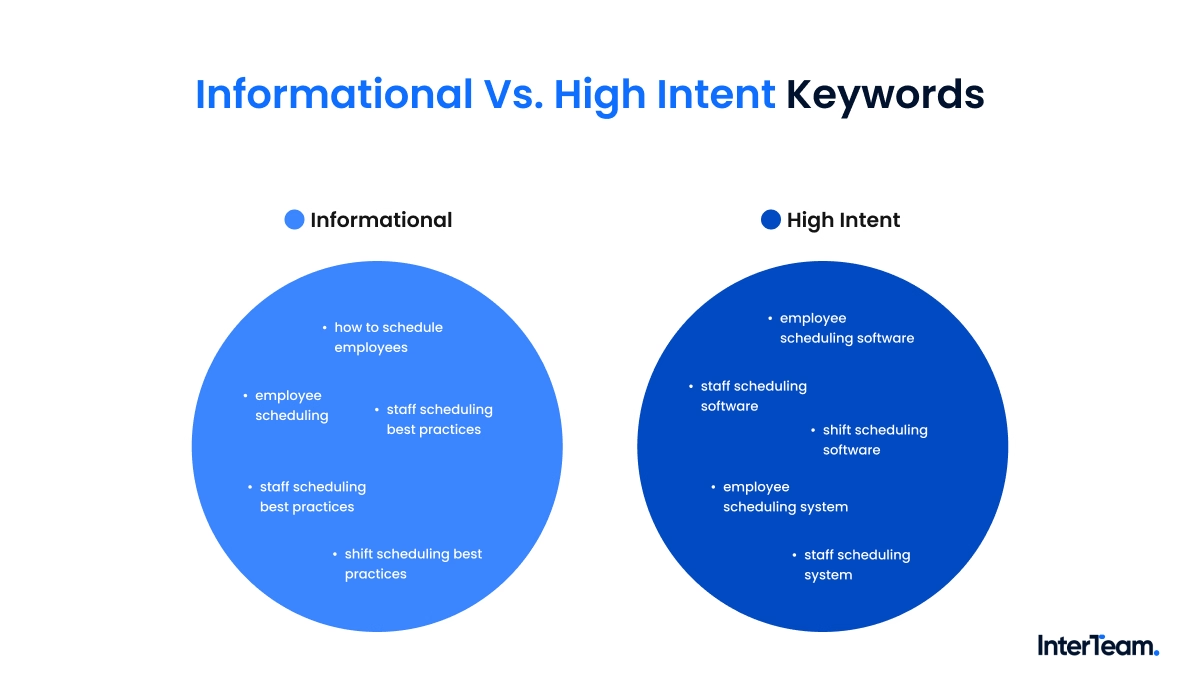
For example, if we are selling project management software, we want to emphasize that it is a software tool.
Our keyword list would look like this:
- project management software
- project management tools
- project management app
- software for project management
Targeting more general keywords, like “project management,” is likely to produce a lot of top-of-funnel audiences looking for informational content, and these leads are far less likely to convert.
With our keyword list identified, we then choose our keyword match types. We always suggest sticking with exact match keywords. This keeps your ad spend focused on searches with clear high-intent signals, while reducing the low-intent queries that can come from phrase or broad match keyword targeting.

From there, we consistently monitor how our search campaigns perform. This way, we can spot keywords that are underperforming and exclude them so that we can focus spend on keywords that actually drive conversions.
By refining our targeting around high-converting keywords, we create high-intent search audiences that can be retargeted across other platforms. This ensures our ads reach purchase-ready users, increasing conversion rates and lowering CPLs across channels.
Competitor Campaigns
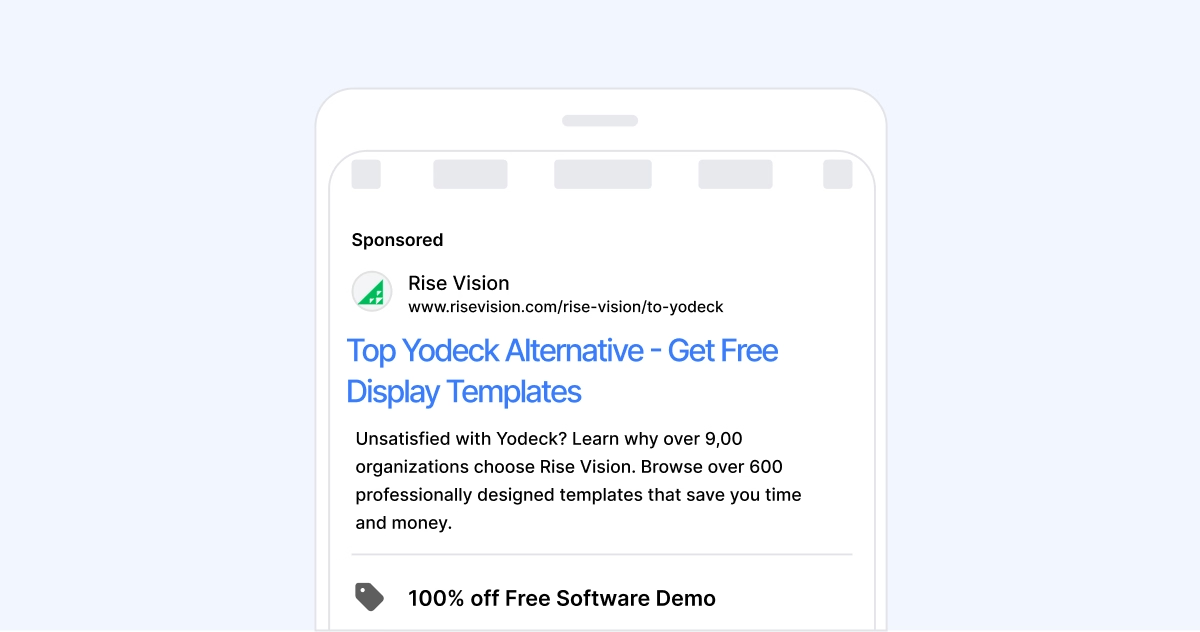
Targeting competitor keywords can also be an effective strategy for reaching high-intent, in-market audiences through Google Ads, and it’s one of the reasons Google Ads competitor campaigns play a key role in our omnichannel strategy.
As with our general search campaigns, we always make sure to combine competitor targeting with high-intent qualifying terms, like “alternative,” “review,” “pricing,” or “demo."
For example, our competitor keyword lists typically look like this:
- [competitor] alternative
- [competitor] review
- [competitor] pricing
- [competitor] demo
- [competitor] free trial
By targeting competitors with these qualifying terms, we reach bottom-of-funnel audiences that are actively comparing solutions. This allows us to pull them into our funnel right as they are ready to convert.
That said, competitor campaigns only make sense when there is meaningful search volume around these high-intent competitor terms. That’s why we always start with keyword research, using tools like SpyFu to determine whether competitor targeting should be included as part of the omnichannel strategy.
At InterTeam, we’ve made competitor keyword research extremely easy. All you have to do is plug a competitor into our Competitor Keyword Generator, and we’ll give you a list of high-intent competitor keywords for free.
Brand Campaigns
If you are bidding on competitor keywords, your competitors may be doing the same to you. That’s why it’s important to consider running a Google Ads brand campaign.
A brand campaign isn’t always a requirement in our omnichannel strategies. If no one is bidding on your branded keywords, then searchers are likely to convert through organic results without the need for paid brand coverage.
Still, there are a few reasons why brand campaigns may be a good idea. These include:
- Protecting your brand from competitors: If competitors are actively bidding on your branded keywords, then branded campaigns become essential for protecting that search traffic.
- Directing high-intent traffic to conversion-optimized landing pages: If organic traffic is landing on less optimized pages, a branded campaign gives you more control, which can help increase conversion rates.
- Generating more conversion data: Branded campaigns can help drive additional conversions, which can be useful for accounts that struggle to generate enough conversion volume for Google Ads to optimize effectively.
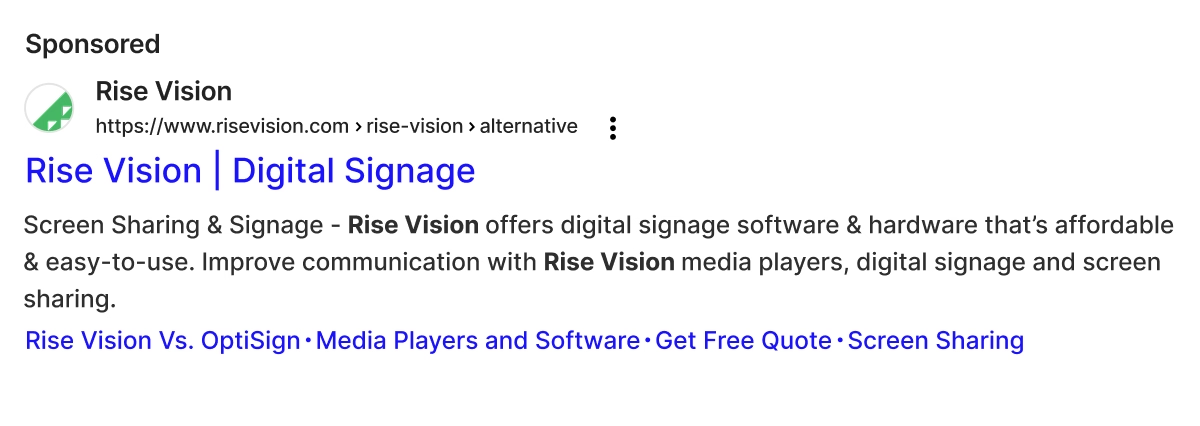
Before deciding whether or not to run a Google Ads brand campaign as part of our omnichannel strategy, we always review keyword history. Using tools like Google Ads Keyword Planner, SpyFu, and SEMrush, we can see whether competitors are currently bidding on branded keywords or have done so in the past.
If competition is high, we include a branded campaign in the strategy. If there is no competition, a branded campaign is not required.
Microsoft Search Ads Strategy
While technically a different platform, we occasionally use Microsoft Search Ads to expand the reach of our search campaigns, especially when running campaigns that target B2B audiences.
Certain industries tend to perform extremely well on Microsoft Ads. While the platform only holds about 4.3 percent of the global search engine market, its demographic skews toward B2B decision-makers and has been growing in popularity across age groups.

At the same time, Microsoft attracts a disproportionately high number of desktop users, owning a reported 24.3% of the PC market share and attracting more than 23.3 billion PC searches each month.
The reason behind this is that Bing is often the default search engine for businesses that use Microsoft products, which means many searches originate from corporate environments where users are actively researching tools and services for work-related needs.
Despite attracting a high volume of high-intent B2B audiences, competition on Microsoft Ads is still extremely low. This allows us to expand our search campaigns using the same tactics we apply in Google Ads, but at far more affordable CPCs.
In the process, we gain exposure across several search engines, including Bing, Yahoo, AOL, and DuckDuckGo. The Microsoft Ads Network also includes partner websites, but these tend to be lower quality, especially for B2B campaigns.
To manage this, we exclude partner sites by default, using our Complete List of Bing Exclusion URLs to keep traffic quality high.
Reddit Ads Strategy
Reddit is an underestimated advertising platform for B2B audiences. The platform has a reputation for having B2C-heavy audiences, but there are strong pockets of high-intent B2B users who rely on the platform to research tools, software, and solutions.
When integrated into an effective omnichannel strategy, Reddit becomes a powerful channel for influencing purchasing decisions. When someone searches for software, their journey often starts on Google. But when they look for honest reviews and real feedback, they rely on Reddit.
By displaying ads in both places, we ensure products are discovered through Google while we use Reddit to nurture leads and reaffirm positioning as a trusted solution.
Below are a few types of campaigns our Reddit Ads Agency runs as part of our greater omnichannel advertising strategy. For a more detailed breakdown, you can check out our B2B Reddit Ads guide.
High-Intent Community Targeting
The power of Reddit is found within its niche communities. The platform includes more than 100,000 different subreddits, providing a home for all types of conversations. This offers advertisers a unique window for reaching highly engaged audiences that are actively participating in conversations related to their offer.
We break down these Reddit Ads targeting strategies in more detail in our dedicated guide to reaching high-intent Reddit audiences.

This is why we like to run campaigns targeting high-intent communities. While it may be tempting to chase large subreddits with partial relevance, it’s often the smaller, more specific communities that generate the best results.
For example, if we have a product that solves a problem in the additive manufacturing space, our ads will likely generate the best results when targeting r/additivemanufacturing rather than the general r/manufacturing subreddit, even though the latter has a far larger membership base.
At InterTeam, we use three approaches to identify these high-intent communities:
- Use the Ad Group Interface to identify suggested related communities during setup
- Conduct a Google search with our targeted keyword + “Reddit” to surface real conversations already happening
- Review conversion data to identify subreddits that have already generated conversions
Through those three methods, we can usually uncover several communities related to our offers, but we like to refine the list further by searching for only the highest-intent subreddits.
The trick is balancing relevance with volume. A group of 500 members can easily outperform one with 500,000 if the intent is more aligned with the offer. As a general rule, we like to start with audiences of at least 1,000 members, but we aren’t afraid to test smaller groups should the intent be there.
This level of refined targeting serves two purposes. First, it helps us reach users who are more likely to benefit from the offer, and second, it lets us tailor our creative and messaging to match their specific intent. This helps our ads blend in with the existing conversation, which is critical for converting Reddit’s ad-averse audiences.



Keyword-Based Discovery Campaigns
Along with community targeting, we also like to run Reddit Ads campaigns that target relevant keywords. This allows us to target users who are actively searching and participating in relevant discussions, while improving CTRs by an average of 29.6%, according to Reddit.
Identifying which keywords to target starts with the data we already have. We review Google Search Console, Google Ads, and GA4 to identify high-intent keywords that already have conversion data, relying on information generated from other platforms within our omnichannel strategy.
From there, we select our placements. We test both conversation and feed placements, but we tend to generate the best results and focus our budgets on conversation placements. This is because Reddit threads tend to attract high volumes of organic search and AI referral traffic, meaning they are the entry point for some of the highest intent audiences.

The key to our keyword-based campaigns is monitoring. We consistently review performance to remove any terms that either underperform or fail to generate leads.
Low Cost Creative Testing
One of the major benefits of Reddit is that it offers extremely low CPCs compared to other platforms.
Many Reddit Ads run for under $2 per click, and they rarely ever exceed $5. Combine that with the platform’s ad-averse audience, and it becomes a great place to test creative before rolling it out to higher spend platforms like Google or LinkedIn, which often exceed $40 per click.
That’s why Reddit has become our primary channel for testing and refining ads. Some A/B tests we run include:
- Different-sized creative
- Different headlines
- Different intro text
- Different CTAs
In doing so, we can see what resonates most with technical and problem-aware audiences without wasting budget on running the same tests on higher cost clicks. In this way, we are able to improve conversion rates across all of our omnichannel platforms while keeping our overall costs down.
LinkedIn Ads Strategy
LinkedIn is one of the best platforms for reaching high-level decision-makers, especially in B2B. Its refined targeting allows us to filter audiences based on job titles, industries, and seniority, making it easy to align campaigns around an ICP.
However, while LinkedIn boasts some of the highest-intent audiences, it also has some of the highest CPCs of any advertising platform, meaning you pay a premium to reach those users.
Because of this, we use LinkedIn selectively within our omnichannel strategy. It performs best in bottom-of-funnel and retargeting campaigns, where higher intent and conversion rates, supported by data from other channels, help justify the CPCs.
Below are the primary types of LinkedIn Ads campaigns our LinkedIn Ads Agency uses as part of our omnichannel advertising strategy. For a more detailed breakdown, you can check out our Complete B2B LinkedIn Ads Guide.

Awareness and Demand Generation Campaigns
It’s true that LinkedIn’s high CPCs make it difficult to scale top-of-funnel awareness campaigns. But there are a few ways around this.
At InterTeam, we like to use Text Ads and Spotlight Ads to generate awareness at extremely low costs. This works because these ad formats operate on a pay-per-click basis, but they rarely drive clicks.
Text and Spotlight Ads appear on the right rail of the LinkedIn interface and only show on desktop, which typically signals much higher intent than mobile users.
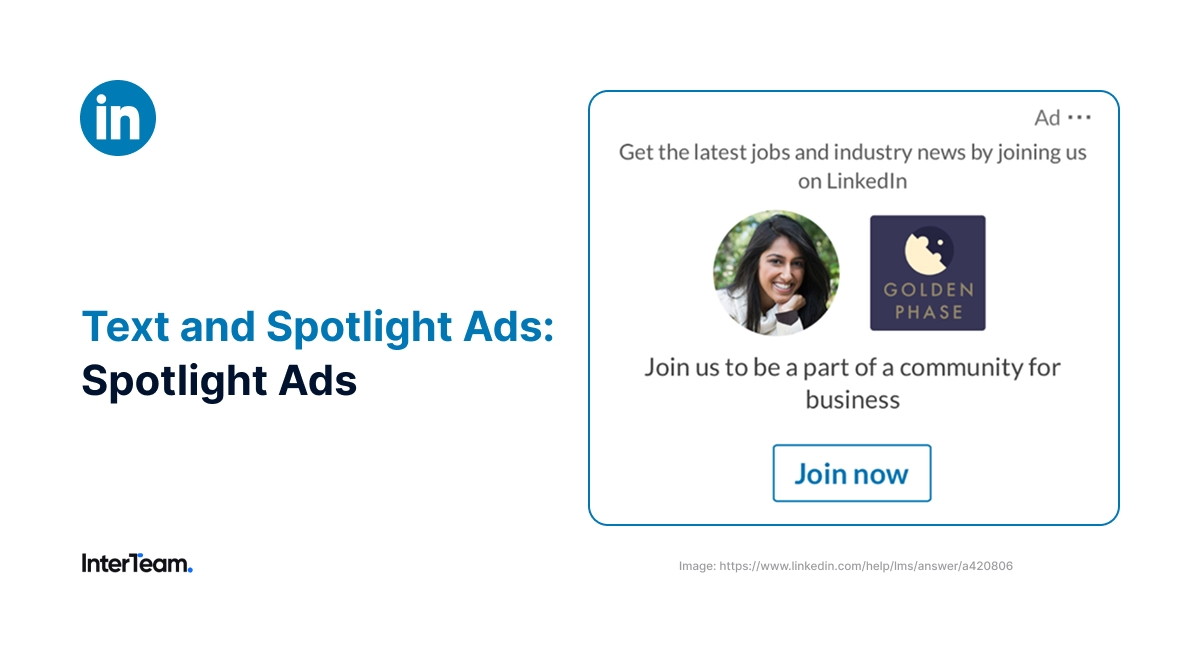
While these ads don’t tend to drive many click-through conversions (conversions where somebody clicks an ad and converts), they do generate view-through conversions (conversions where somebody views an ad and converts). This allows us to essentially convert high-intent desktop users without actually paying for a click.
This campaign type is at its best when it’s being used alongside a larger omnichannel strategy. They enhance the performance of feed ads in LinkedIn and they become a cost-effective way to maintain brand awareness throughout long evaluation cycles, which helps improve conversion rates across our other channels.
Lead Magnet Campaigns with Lead Gen Forms
Another way we generate top-of-funnel leads while managing LinkedIn’s high CPCs is by providing real value through lead magnets and promoting them through the platform’s native Lead Gen Forms.
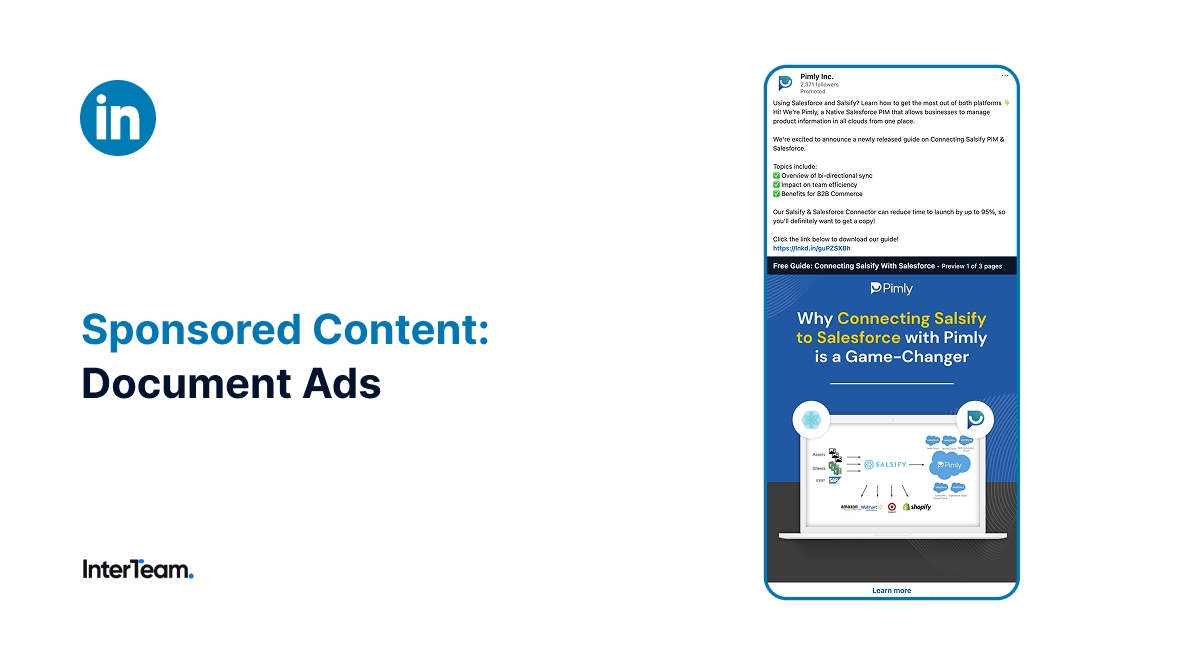
This combination tends to convert extremely well on LinkedIn, where users are often looking for informational content. When layered with ICP targeting filters, it allows us to attract a high volume of qualified leads at a scale that makes the higher CPCs worth the price.
These campaigns start with an effective offer. We’ve found eBooks and webinars to perform especially well, since they align closely with the type of content LinkedIn’s audience already engages with.
Once the offer is ready, we promote it using LinkedIn Lead Gen Forms. These native forms allow users to submit their contact information directly on the platform and receive the content in return.
Lead Gen Forms can be used across several LinkedIn ad formats, with the best option depending on the type of lead magnet. We typically use document ads to preview the first few pages of an eBook or guide, while video ads tend to convert best for webinars and demos.
Used this way, LinkedIn becomes a reliable source of form fills that feed into our broader omnichannel strategy by providing first-party data we can use to retarget and qualify leads across other channels later on.
Conversation Ads for Direct Response
On LinkedIn, aggressive CTAs tend to underperform in feed-based ads, especially earlier in the evaluation cycle. For this reason, we use Conversation Ads as a mid- to bottom-of-funnel format, where the goal is to nurture leads through product discovery and education.
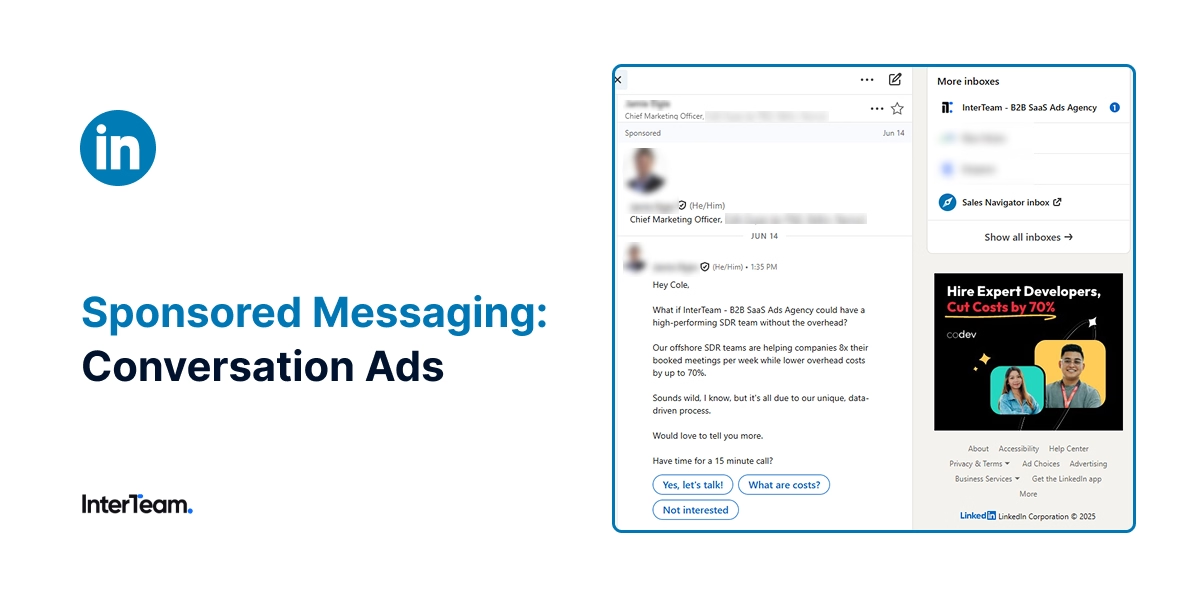
Conversation Ads let us create an interactive, multiple-choice experience delivered directly to a user’s LinkedIn inbox. Instead of forcing a single action, users are presented with several response options, with the conversation adapting dynamically based on the path they choose.
This allows us to create personalized pathways that respond to different pain points, while still keeping messaging aligned with what prospects have already seen across other channels.
While recipients can’t reply directly in the chat, these ads drive conversions by directing users to a landing page or a native Lead Gen form.
Used this way, Conversation Ads help us deliver more personalized follow-up at scale, while staying aligned with the rest of our omnichannel strategy.
Cross-Channel Retargeting
Cross-channel retargeting plays a central role in our omnichannel advertising strategy, and it starts with unified data collection and platform signals that identify high-intent behavior.
To ensure our campaigns are properly aligned, we begin by setting up retargeting audiences and conversion tracking using both pixel-based and first-party systems, such as server-side tracking and CRM-integrated conversion tracking. This helps us avoid low match rates on any single platform and ensures we can continue optimizing even if one data source underperforms.
At InterTeam, we refer to our retargeting strategy as “surrounding your leads.” This is because we use coordinated retargeting to keep audiences engaged across platforms and throughout every stage of the evaluation cycle.
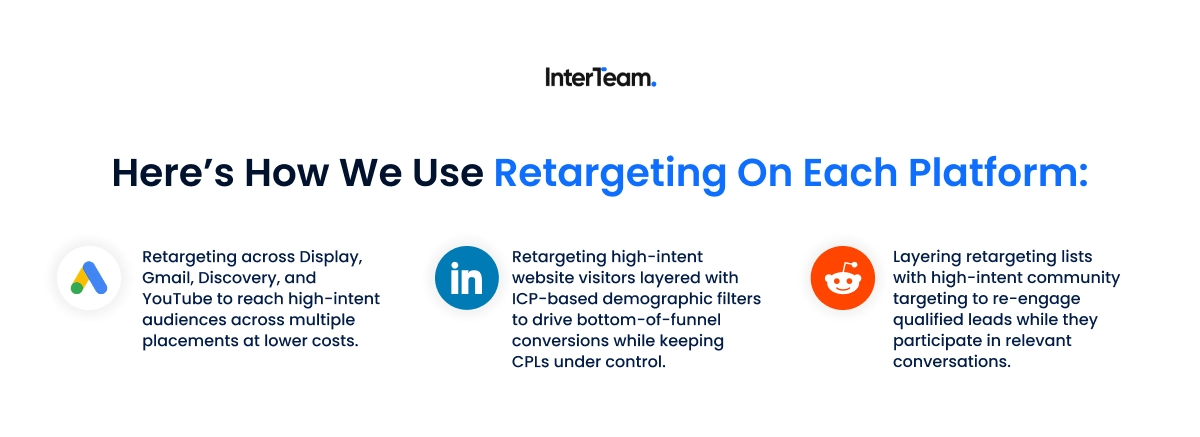
Here’s how we use retargeting on each platform:
- Google: Retargeting across Display, Gmail, Discovery, and YouTube to reach high-intent audiences across multiple placements at lower costs.
- LinkedIn: Retargeting high-intent website visitors layered with ICP-based demographic filters to drive bottom-of-funnel conversions while keeping CPLs under control.
- Reddit: Layering retargeting lists with high-intent community targeting to re-engage qualified leads while they participate in relevant conversations.
By maintaining consistent messaging across all of our advertising channels, we stay present wherever prospects go. This increased frequency and familiarity help shorten evaluation cycles and guide leads through the funnel more efficiently.
In practice, this approach has helped us take year-long sales cycles and shorten them to a month, simply by maintaining consistent retargeting across a coordinated omnichannel approach.
Examples of Omnichannel Marketing Campaigns
At InterTeam, we’ve helped dozens of clients scale paid advertising using this same omnichannel strategy. By coordinating platforms, aligning data, and sequencing intent correctly, we’re able to increase lead volume while lowering overall cost per lead and improving pipeline quality.
Below are a few examples of how this approach has performed in real campaigns:
- Performance Marketing Case Study: Generated over $100,000 in pipeline, increased monthly lead volume by 7x, and reduced CPL by 87% across Google, Reddit, and LinkedIn within three months.
- Google & LinkedIn Ads Case Study: Closed a $100,000 enterprise deal and achieved a 5x ROI within a two-month period using coordinated Google and LinkedIn campaigns.
- B2B SaaS Lead Generation Case Study: Increased conversion rates by 218% and generated 25% more MQLs through Google, LinkedIn, and Microsoft Ads.
Want Us to Build You an Omnichannel Advertising Strategy?
If you’re looking to scale paid advertising without wasting budget across disconnected platforms, you need a partner who knows how to build and manage a true omnichannel strategy that actually drives pipeline.
At InterTeam, we’ve developed a proven process for aligning channels like Google, Reddit, and LinkedIn around intent, data, and sequencing. The framework is adapted based on your industry and buying cycle, but it’s been tested across hundreds of thousands of dollars in ad spend, and the results speak for themselves.
Click this link to request a custom ad strategy call with our founder and see how this approach could work for your business.
FAQs
Template question
Template text answer
Want to see if paid ads would work for your business?