How to Improve Lead Quality in Your Ad Campaigns
Are your ads generating clicks but not conversions? The issue isn't your offer, but the quality of leads you are reaching.
Poor lead quality has become one of the biggest challenges for PPC advertisers, and with cost per click rising across Google Ads, LinkedIn, and Meta, improving lead quality is becoming essential to driving ROI through paid advertising.
At InterTeam, we've helped brands scale their paid advertising by focusing on better targeting, lead qualification, and conversion optimization strategies that attract high-intent audiences while filtering out low-intent leads.
In this guide, we share our best practices for improving lead quality across ad campaigns to help you generate leads that actually convert.
Why Most Ad Campaigns Struggle With Lead Quality
Where many advertisers go wrong is focusing their campaigns on lead volume.
While this approach can help build awareness for your campaigns, it also means you are wasting budget on a lot of unqualified traffic.

The problem is that a lot of advertisers recognize this. They just don't know how to fix it.
After running hundreds of campaigns and auditing dozens of client accounts, we've identified some of the most common causes:
- Poor Targeting: Campaigns are often built around broad audiences or top-funnel interests. Without filters for industry, job title, or company size, ads reach people who were never a fit in the first place.
- Weak Funnel Structure: Many accounts treat every conversion the same. Without segmenting campaigns by funnel stage or intent, awareness ads compete with decision-stage offers and dilute lead quality.
- Lack of Attribution and Feedback: Few teams connect CRM data or sales feedback to their ad results. Without that visibility, it’s impossible to tell which campaigns generate real opportunities and which ones just drive form fills.
Before you can start optimizing your campaigns for lead quality, you first need to identify the issue. You can check out our Guide to Conducting A Google Ads Account Audit to get you started.
8 Best Practices to Improve Lead Quality
Once you know what’s causing poor lead quality, you can start optimizing your campaigns. Here are a few best practices we use to consistently attract high-quality leads.
1. Align Marketing and Sales on What Makes a "Quality Lead"
Before doing anything else, you need to be clear on what a quality lead means for your business. Collaborate with your marketing and sales teams to create a framework based on company-specific criteria that defines your ideal customer.
A common structure we use is the BANT framework:
- Budget: Does the lead have the financial capacity to afford your offer?
- Authority: Is the lead in a decision-making role or able to approve the purchase?
- Need: Does the lead have a genuine problem or pain point that your offer can solve?
- Timeline: What is the lead’s timeframe for making a purchasing decision?

Once you’ve established these criteria, document them in your Ideal Customer Profile (ICP) and share them across both teams. This ensures marketing knows who to attract and sales knows who to prioritize.
From there, build a basic lead scoring model that assigns points based on fit and behavior. This helps both teams evaluate leads consistently, prioritize high-value prospects, and route lower-scoring leads into nurture sequences or retargeting workflows instead of sending everything straight to sales.
You also want to hold weekly check-ins between marketing and sales to review incoming leads, refine qualification criteria, and adjust your targeting or messaging based on real sales feedback. This ongoing alignment is what ultimately drives better lead quality.
2. Target High-Intent Audiences
Once you know what a quality lead looks like, it becomes much easier to build audiences that target them. The exact process will vary depending on the advertising platform, but here are a few tips to help you focus on high-intent audiences.
- Use income, job seniority, company size, or annual revenue filters to reach users who are more likely to qualify for your offer.
- Use audience layering to narrow your targeting and focus on users who closely match your ICP.
- Add exclusion lists to remove obvious low-intent audiences. Common examples include employees, competitors, competitor employees, and current customers.
- Add demographic filters to exclude users who are not in market, such as ages 18 to 24 or 65 plus for many B2B campaigns.
For more guidance, check out our guides on Qualified B2B Targeting With Google Display Ads and the 7 Types of Audience Segments in Google Ads.
3. Target High-Intent, Exact Match Keywords
One of the easiest ways to filter for high-quality leads in a search campaign is by refining your keyword strategy.
Start by identifying a list of high-intent keywords. These are search terms that indicate a high purchase intent from in-market audiences and typically include qualifying terms, like “Software,” “Solution,” “App,” and “Tool” for software and “services,” “Firm,” and “Agency” for services.
For example, if you are selling employee scheduling software, you want to make sure you are targeting the keywords that your ICP is searching for when they are actively looking for a solution. This would include keywords around scheduling software, not just general keywords around employee scheduling, as that would attract a lot of low intent, top-of-funnel audiences.
Instead, your keyword list would look something like this:
- Scheduling Software
- Scheduling Tools
- Scheduling App
- Employee Scheduling Software
- Employee Scheduling Tools
- Employee Scheduling App

Then, once you have your keyword list identified, you want to make sure to use exact match keyword targeting. This ensures your ad spend stays focused on high-intent, high-quality leads while eliminating the unqualified search terms that can come from broad or phrase match targeting.
4. Use Negative Keywords and Audience Exclusions
Another effective way to improve lead quality is to block low-quality audiences from ever seeing your ads. You can do this by adding exclusion lists to both your keyword and audience targeting.
Some of the most common audience exclusions we use include:
- Low-intent audiences (students, job seekers, and irrelevant industries)
- In-house team members and employees
- Competitor employees
- Current customers
- Low-intent segments from audience insights
If you’re running a high-ticket offer, you can also exclude low-income brackets that may not have the budget to qualify.
From there, you can add negative keywords to eliminate irrelevant or out-of-market searches. These often include terms like “job,” “sign in,” and “careers,” which tend to reflect the same low-intent audiences listed above.

The key to keeping your campaigns efficient is running regular audits on your search terms and audience performance. If you find segments that consistently underperform, add them to your exclusion lists to reduce wasted spend.
Just remember not to overdo it. Going too narrow can limit your reach and prevent your ads from reaching potential customers. Finding the right balance takes testing and ongoing optimization.
5. Use Ad Copy to Pre-Qualify Prospects
One of the most common reasons advertisers get low-quality leads is that their ads attract unqualified prospects.
You can fix this by optimizing your ad copy to pre-qualify prospects before they ever enter your sales cycle.
Start by adding qualifiers directly to your ads. Phrases like “Built for Enterprise Teams” or “For Senior Living Communities” tell users exactly who your offer is for. This makes people who match your target audience more likely to click while signalling to unqualified users to keep scrolling.
On the flip side, copy that uses terms like “free” or “affordable” could bring in low quality leads with low budgets.
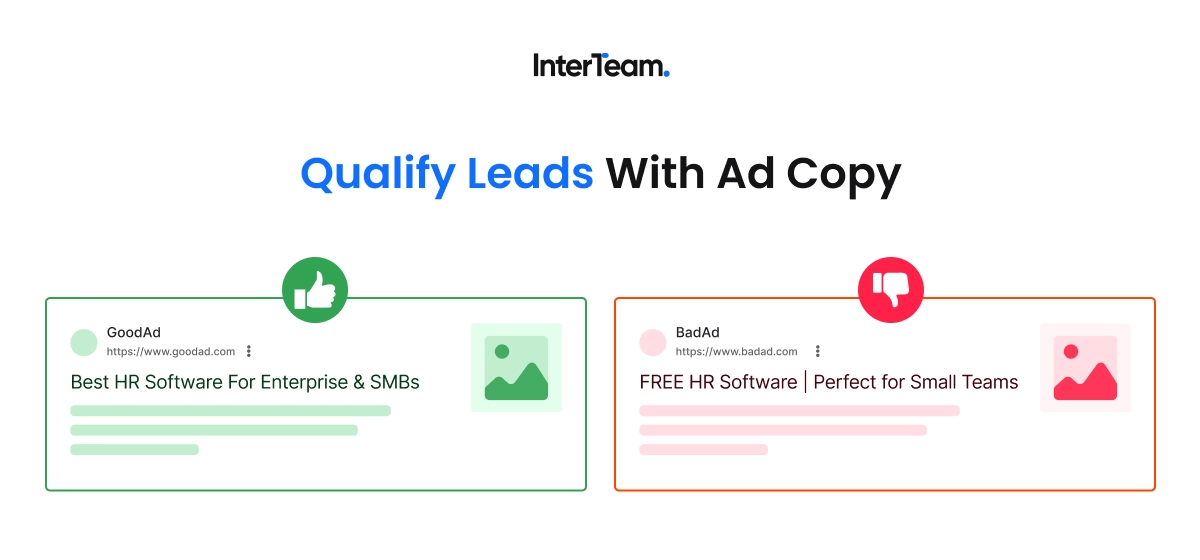
You can also use ad extensions that align with the stage of the buyer journey you’re targeting. These help add context and key information that resonates with your audience, further encouraging qualified leads to engage with your ads.
For more help crafting ad copy that attract the right audience, check out our guides on How to Write the Best B2B Ad Copy and How to Write Google Ads Copy for B2B SaaS and Services.
6. Use Your Lead Form to Filter Out Unqualified Leads
Your lead form is one of the most important qualification points in your funnel. While the landing page and ad copy attracts the right audience, the form determines who actually gets through to sales. Every field you include should help you collect data that confirms fit, intent, or value.
Here is how to qualify leads effectively using the form itself:
- Require business email addresses. Block personal domains such as Gmail or Yahoo to reduce unqualified or low-value submissions.
- Add email validation. Use a validation tool to confirm domain accuracy and reduce spam or invalid entries.
- Add friction intentionally. Include one or two additional fields that help you measure fit, such as company size, role, or industry. This discourages low-intent users from completing the form while helping you identify serious prospects.
- Create custom automations. Set up automations that flag or route qualified leads based on form data. For example, if a company lists more than 100 employees, that submission could automatically be marked as an SQL in your CRM and sent to sales for follow-up.
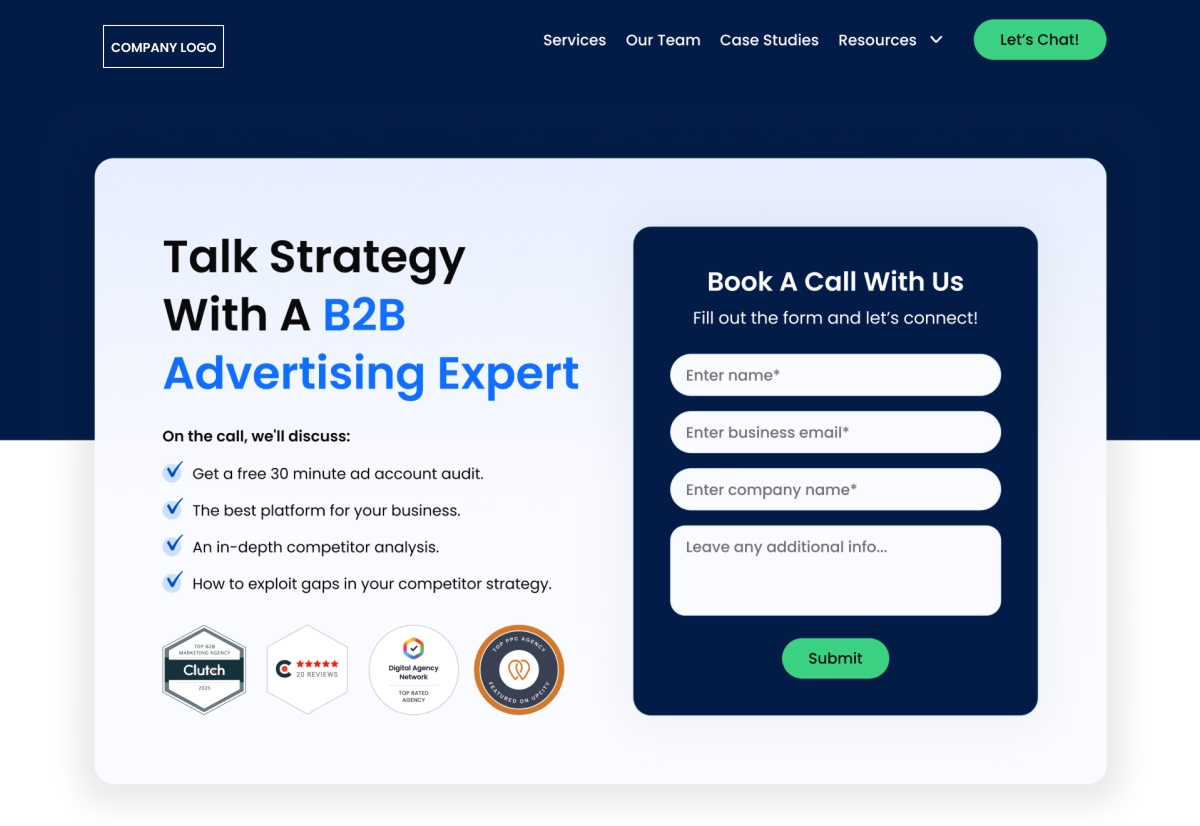
A well-structured form can be a powerful tool for filtering out low-intent users while pushing high-fit prospects deeper into your qualification process, allowing your sales team to focus on high-quality leads.
7. Retarget Around High-Intent Signals
Retargeting campaigns are consistently among the top-performing ad campaigns in terms of conversions. But even these can suffer from low lead quality if you aren't retargeting based on the right signals.
At InterTeam, we remove this obstacle by creating our retargeting lists based on high-intent website behaviors.
Some of the signals we look for include:
- Users who have visited a high-intent page, like a pricing page, free trial sign-up, or demo page.
- Users who spent more than 30 seconds on the website, eliminating bounced traffic.
- Users who scrolled more than 50% of the page, showing clear interest in the offer.
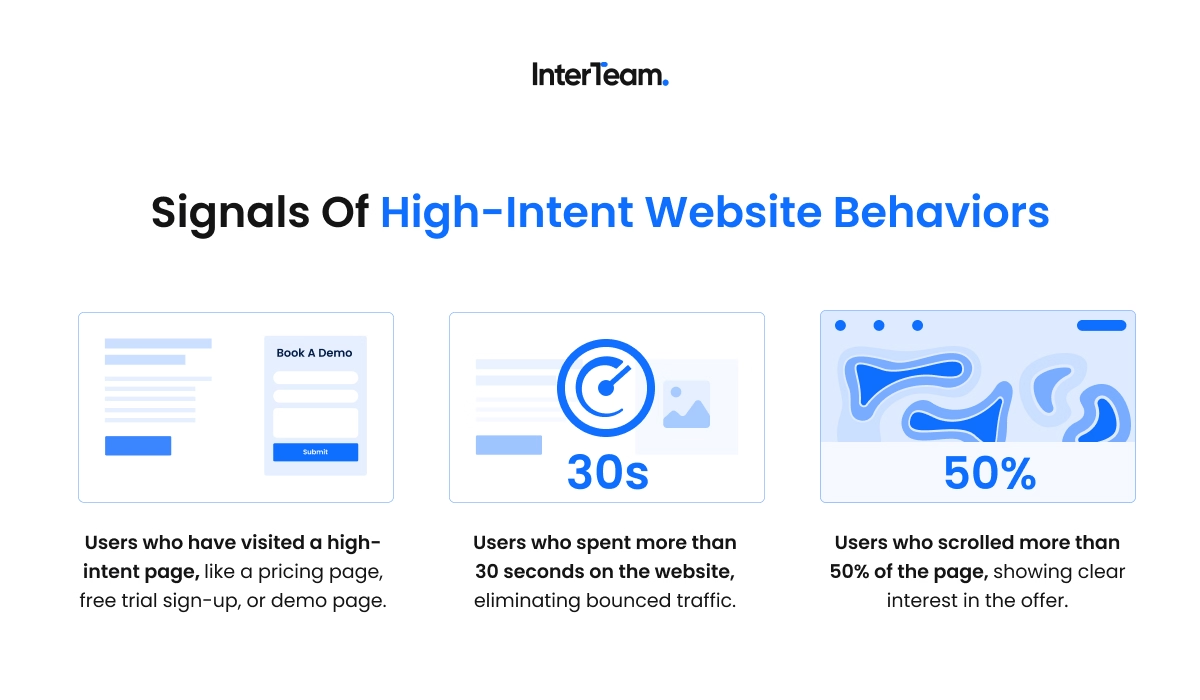
With custom events for these signals set up in GA4, we automate our lead qualification process to streamline our retargeting lists while focusing only on high-quality leads that have shown clear purchase intent.
For more on how we conduct our retargeting campaigns, check out our guides on Retargeting with LinkedIn Ads, Retargeting with Google Ads, and B2B Retargeting Best Practices.
8. Optimize Your Campaigns For MQLs, SQL, and Opportunity Conversions
The most effective way to optimize for qualified leads is to set up conversions that trigger when a lead reaches key lifecycle stages in your CRM.
This requires first integrating your CRM with your ad platforms. Google, LinkedIn, and Facebook all offer native integrations with HubSpot, Salesforce, and several other CRMs. Zapier is also an accessible option with templates for connecting most CRMs to your ad accounts.
Once the integration is active, create conversions that fire the moment a lead becomes an MQL, SQL, or Opportunity. This gives you clear visibility into which campaigns, ads, audiences, and keywords generate qualified pipeline instead of just form fills.
With lifecycle stage conversions in place, you can begin optimizing for revenue-driving outcomes.
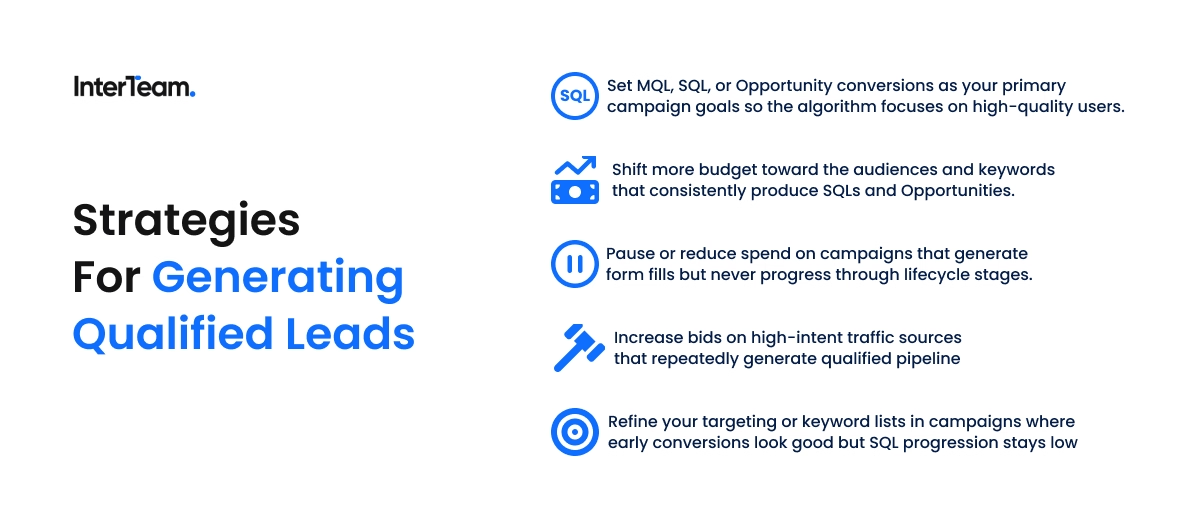
These are a few strategies we use to generate qualified leads:
- Set MQL, SQL, or Opportunity conversions as your primary campaign goals so the algorithm focuses on high-quality users
- Shift more budget toward the audiences and keywords that consistently produce SQLs and Opportunities
- Pause or reduce spend on campaigns that generate form fills but never progress through lifecycle stages
- Increase bids on high-intent traffic sources that repeatedly generate qualified pipeline
- Refine your targeting or keyword lists in campaigns where early conversions look good but SQL progression stays low
It is critical that you never send low-quality conversions back into your ad platforms. If you do, the algorithms will optimize for those users and continue delivering the same poor traffic.
High-quality qualification signals guide the platforms toward the audiences that matter, and proper conversion tracking should be in place from day one.
What Better Lead Quality Looks Like
As PPC advertising experts, we’ve helped dozens of clients scale their sales and reduce cost per lead (CPL) by improving lead quality through better targeting, qualification, and conversion optimization.
Here are a few of the results we’ve achieved in recent campaigns:
- B2B SaaS Growth Marketing Case Study - 166% increase in conversion rate and back-to-back record quarters
- Multi-Channel Performance Marketing Case Study - 7x increase in monthly leads and 87% lower CPL
- SaaS PPC Case Study - 23x more sign-ups with a $676 reduction in cost per lead
Need Help Improving Lead Quality?
If you’re getting clicks but not conversions, it’s time to focus on improving your lead quality.
At InterTeam, we’ve built a proven system that generated over $80,000 in qualified pipeline within three months for one of our clients.
Schedule a free strategy call to see how we can do the same for you.
FAQs
Template question
Template text answer



Want to see if paid ads would work for your business?