B2B Advertising for Healthcare SaaS
Empeon

About
Empeon
Empeon is a leading B2B healthcare technology solution for HR and payroll. Their target audience includes nursing homes, skilled nursing facilities, and other healthcare providers.
Operating in an extremely competitive healthcare SaaS market, Empeon struggled to generate consistent inbound leads, which led them to partner with InterTeam.
After just 8 months, Empeon experienced:
- 3x increase in monthly leads
- 42% decrease in CPLs from search campaigns
- $137,000 in pipeline generated
In this healthcare SaaS PPC case study, we break down how we validated demand on Google, fixed attribution issues, and scaled lead generation by shifting to Bing and LinkedIn.
Why They Chose InterTeam
Empeon had worked with advertising agencies before, but they struggled to generate meaningful results. Despite this, they were confident that paid ads could work for their business because their competitors were investing heavily in it. They felt they just hadn’t found the right approach. This is what led them to InterTeam.
After finding us through our LinkedIn profile, Empeon saw our focus on lead quality and structured, cross-channel execution as a better fit for what they were trying to achieve, so they reached out.
As we do with all clients, we started with a free Google Ads audit and strategy proposal. We outlined a strategy that combined lead magnets with high-intent keyword targeting to reach in-market audiences through search.
They aligned with the approach, and we moved forward with the rollout.
Building a Multichannel PPC Strategy For Healthcare SaaS
The biggest challenge with Empeon was identifying which channels could drive qualified leads at a scalable cost. While we started with Google Ads to validate search demand, we ran into limitations related to rising costs and performance efficiency.
Based on prior experience running Bing Ads for other healthcare SaaS companies, we shifted our focus to Bing as an alternative search platform, while layering in LinkedIn to support top-of-funnel awareness and retargeting campaigns.
The entire campaign was rolled out in three phases.
Phase 1: Launching Google Ads and Fixing Attribution
We started with search campaigns on Google Ads, targeting keywords that signaled clear purchase intent.
From there, we launched campaigns focused on lead magnet-driven offers. In total, we launched 55 campaigns and 5,600 ads through Google Ads.
Below are the two strategies we used.
High Intent Keyword Targeting
The first strategy of the search campaign focused on keywords that showed clear purchase intent. Rather than prioritizing volume, we focused on industry-specific searches that indicated active evaluation.
For Empeon, this meant keywords centered around payroll, workforce management, staffing, and scheduling for healthcare services.
To maintain control over lead quality, we relied on exact match targeting. This ensured ads were served to in-market audiences while avoiding low-intent queries that are more common with broad or phrase match keywords.
We also built dedicated landing pages that were optimized for each category of keywords that we were targeting. Once live, we built out landing page variants in Unbounce and A/B tested different landing page features to optimize the conversion rate on the page. In total, we built more than 40 landing pages with over 100 variants to support different keyword themes and use cases, while maintaining consistency between ads and landing pages.
Leveraging Lead Magnets in Search Campaigns
The second key element of our search strategy involved creating lead magnets. We created six lead magnet pages promoting different guides related to individual services that Empeon provided. These pages were optimized for the keywords we were targeting and produced a significantly lower CPL and significantly higher conversion rate.
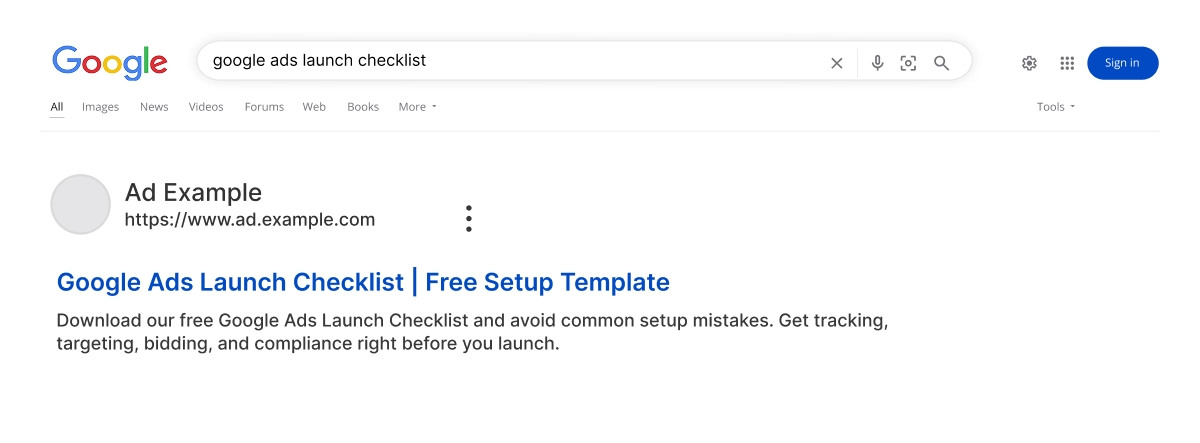
The pages also allowed us to capture leads from lower intent, informational searches. These searches typically have less competition and lower CPCs, so the strategy was more efficient.
On the landing pages, we structured form fields to collect meaningful context upfront while requiring a business email. This helped filter out low-intent Gmail submissions and allowed us to better qualify leads before moving them into the next stage of the sales cycle.
After conversion, each lead magnet triggered an automated follow-up sequence that delivered the asset and provided users with a clear next step, keeping the conversation moving beyond the initial download.
The Results
At the beginning of the campaign, we ran into several issues that were breaking conversion tracking and attribution, which limited our ability to accurately measure performance.
These included WordPress plugins that were lazy-loading critical scripts, preventing ad platforms from tracking conversions correctly, as well as redirects that were stripping UTM parameters and causing leads to appear as direct traffic inside HubSpot.
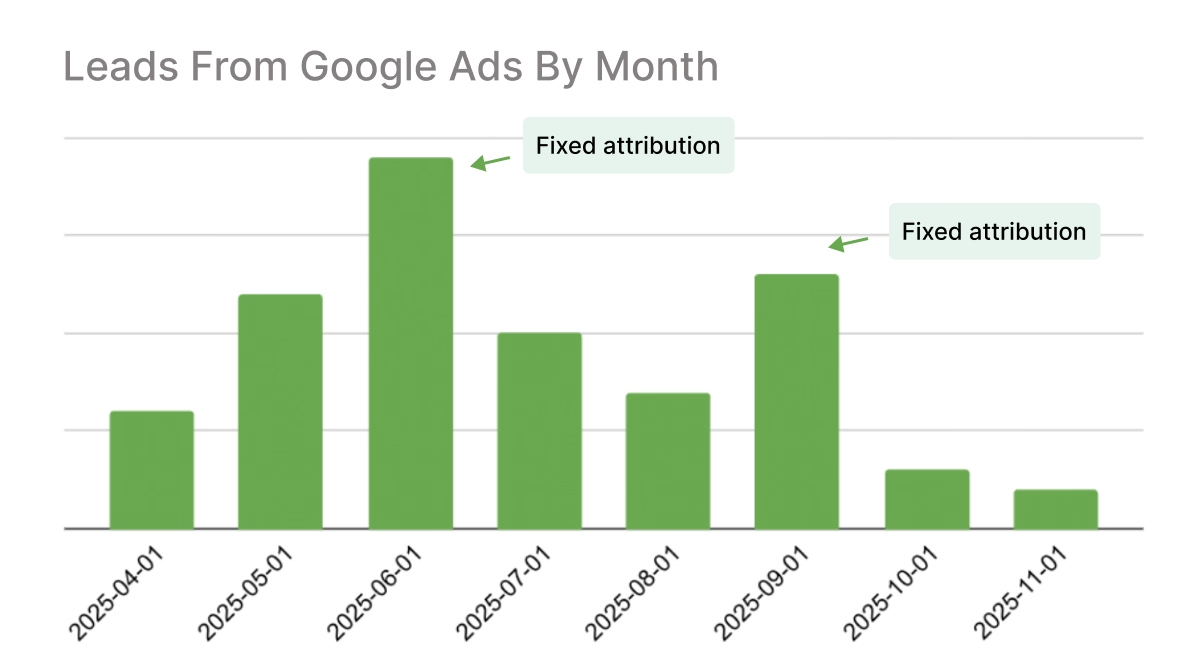
As a result, we weren’t able to properly attribute leads to our campaigns for a significant period of time. During that period the algorithm couldn’t optimize for a qualified lead, and our cost per lead skyrocketed.
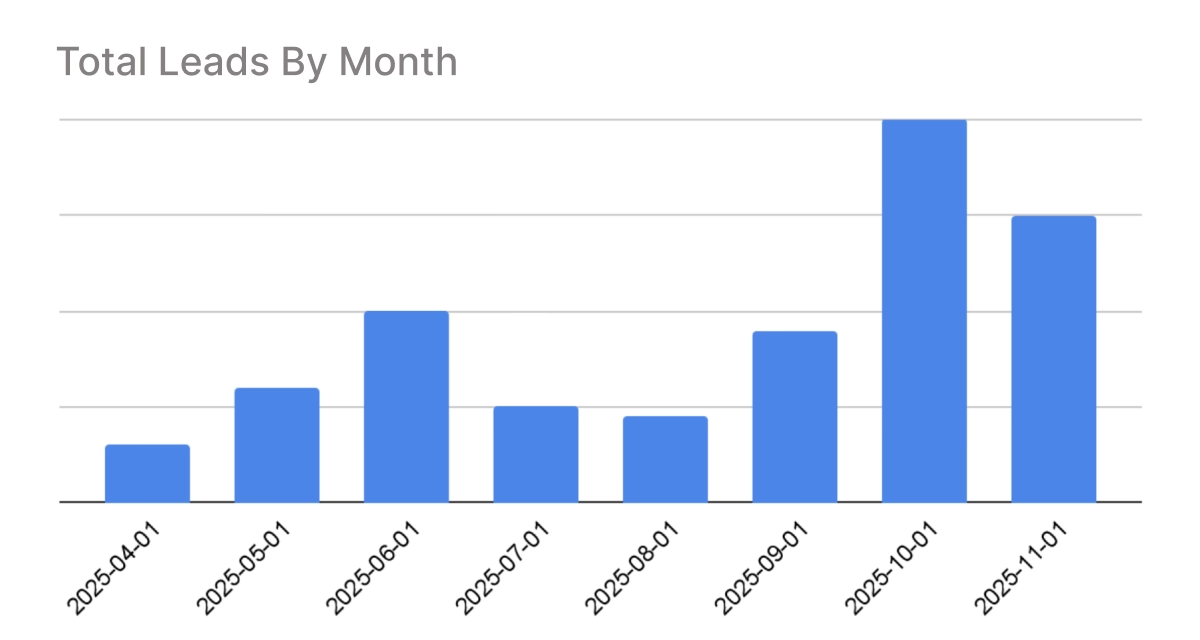
Once those issues were fixed, we gained clear visibility into performance and began to see measurable traction, including an over 3x increase in monthly leads between April and June.
However, despite generating a higher volume of leads, the industry’s high level of competition and Google’s elevated CPCs meant those leads were coming in at a higher cost per lead than we would have liked, making the campaigns difficult to scale.
At that point, we began looking to other channels. Google had validated demand and the effectiveness of search campaigns, but we needed a platform that allowed us to scale with more manageable CPCs.
Phase 2: Pivoting from Google to Bing
Most advertisers view Bing as a complementary platform for Google Ads. They think that if they are getting results on Google, layering in Bing is a good way to increase impression share by around 5–10%.
While this can be true, there are also instances where it makes sense to use Bing as a primary search ads channel, and that is what we determined was the best option for Empeon.
One of Bing’s most prominent limiting factors is search volume. Some verticals tend to lack significant search volume on the platform, but we had tested Bing for another healthcare SaaS product in the past and knew it could work if handled properly.
We started rolling out the same Google campaigns on Bing, and the results were immediate.
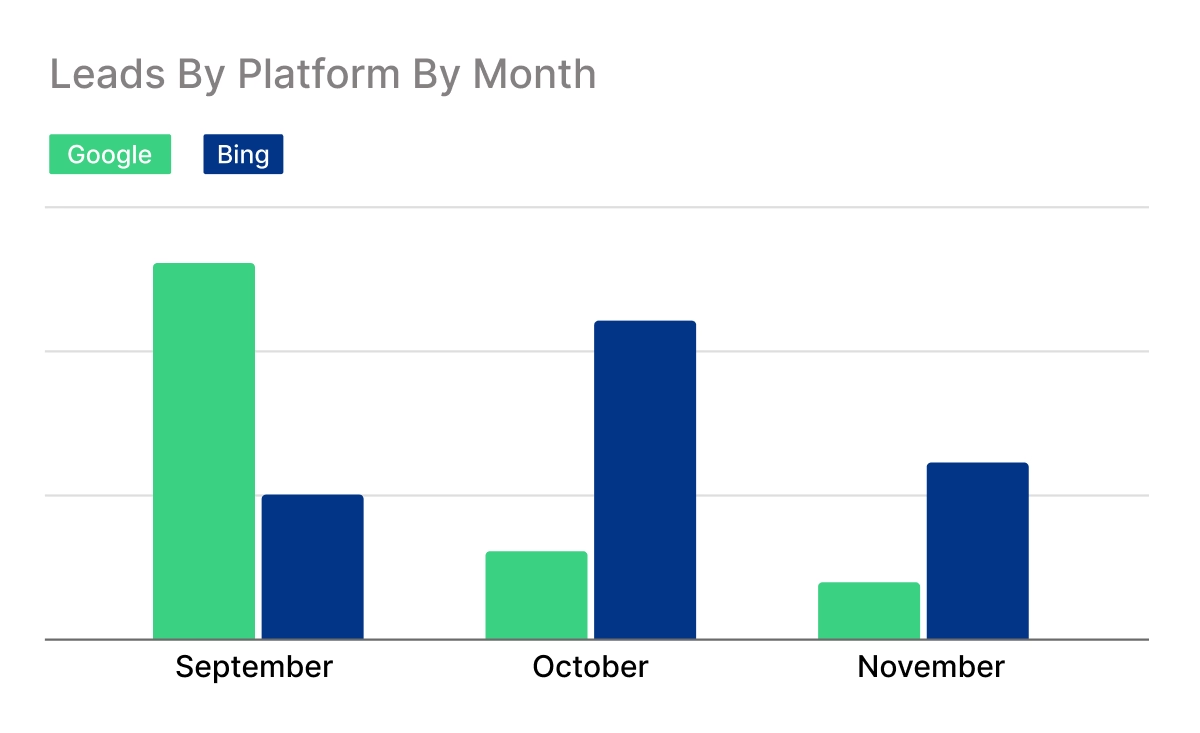
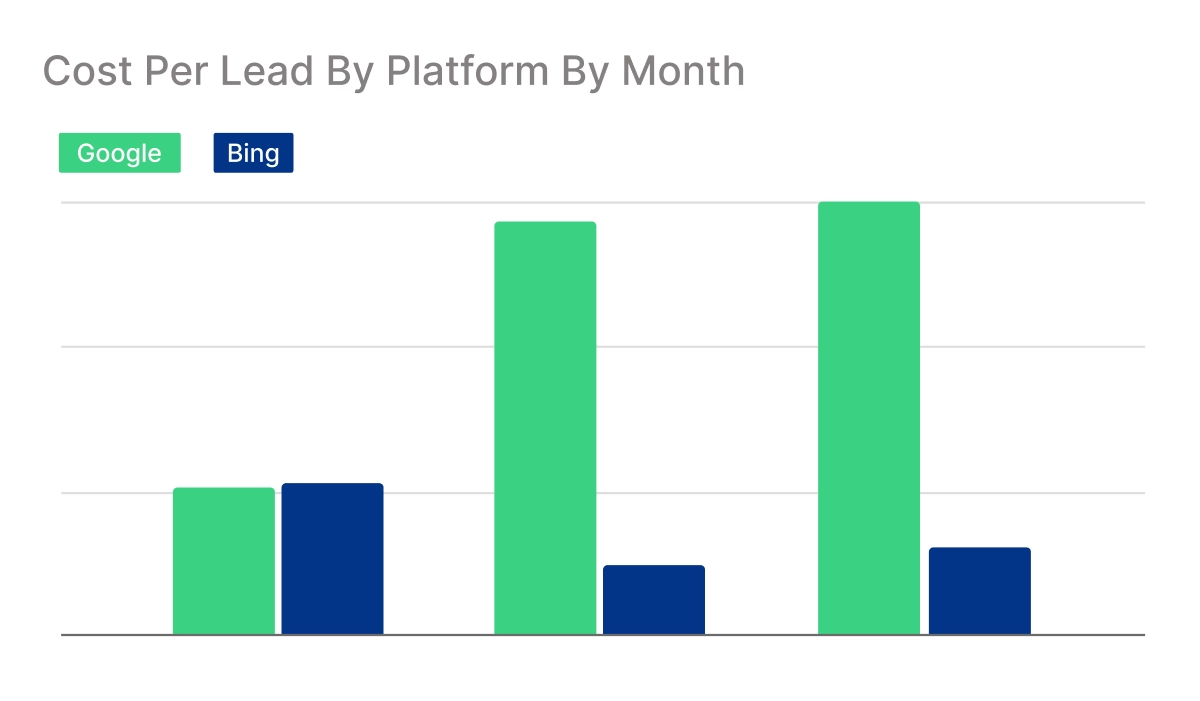
Compared to Google, Bing delivered:
- 42% lower CPLs
- 31% lower average CPCs
Another thing we noticed was that the leads generated through Bing were extremely high quality. One possible reason for this is that Bing has a higher concentration of business users, as it is the default search platform for many companies that rely on Microsoft products. At the same time, Bing has a much higher percentage of desktop users, which often indicates much higher intent than mobile devices.
In the end, despite having significantly less search volume than Google, we were able to generate a similar volume of leads for Empeon through Bing Ads at significantly lower costs, all while using the same strategies we had been running on Google.
For the first time, Empeon had a reliable and scalable lead acquisition channel, and we slowly started shifting more budget from Google to Bing.
Phase 3: Launching LinkedIn for ToFu and Retargeting Campaigns
With a steady stream of leads coming in through search campaigns, the next phase of our strategy was to launch top-of-funnel and retargeting campaigns on LinkedIn.
We used job title, seniority, and company-level targeting to focus distribution around Empeon’s ideal customer profile, while layering in retargeting lists to ensure our ads reached decision-makers who had already shown intent through search.
Here are the strategies we used.
ToFu Awareness Campaigns

LinkedIn is known for high CPCs, which makes most top-of-funnel campaigns difficult to scale efficiently. However, we still wanted to support Empeon’s awareness efforts without blowing through their budget.
To accomplish this, we created Text and Spotlight Ads to generate low-cost exposure. These ads are unique in that they run on a cost-per-click model, but in practice, they rarely generate clicks.
Text and Spotlight Ads appear on LinkedIn's right rail, meaning they only appear on desktop. By creating simple creative consisting of a headline, logo, and short text, these ad types are fantastic for maintaining visibility among the platform's highest intent audiences over long sales cycles.
These ad types weren’t designed to drive direct conversions on their own, but as part of a broader omnichannel advertising strategy, they played an important role in keeping Empeon top of mind.
Retargeting Using Document Ads
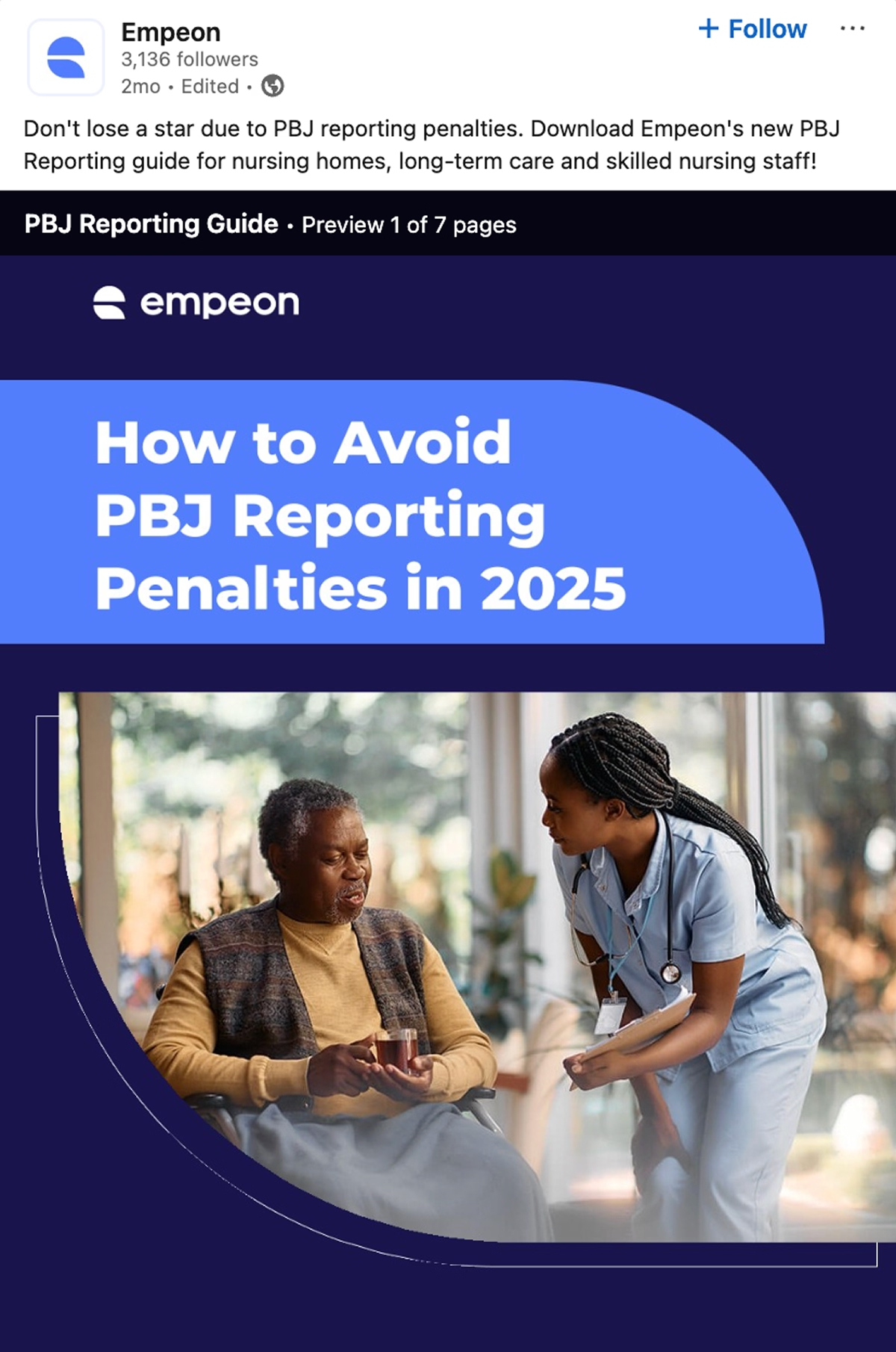
The other way we used LinkedIn was for retargeting. These campaigns were built to re-engage users who had already shown interest through our search campaigns but did not convert on their first visit.
To identify these users, we created high-intent audiences based on on-site behavior tracked through GA4. These included users who:
- Visited high-intent pages such as demo, pricing, or lead magnet landing pages
- Spent more than 30 seconds on the site
- Reached at least 50% scroll depth
This allowed us to focus retargeting efforts on users showing clear buying signals, rather than broad site traffic or users who bounced quickly.
From there, we layered job function, seniority, and company-level targeting on top of these retargeting audiences so ads were only shown to users who matched Empeon’s ICP.
For the ad format, we used LinkedIn Document Ads paired with Native Lead Gen Forms to promote the same staffing and scheduling lead magnets used in search. This allowed users to preview the asset and submit their information directly within LinkedIn, without being pushed to an external landing page.
By retargeting users who had already shown intent and reducing friction in the conversion flow, we were able to capture additional leads that would have otherwise been lost after the first visit.
The Results
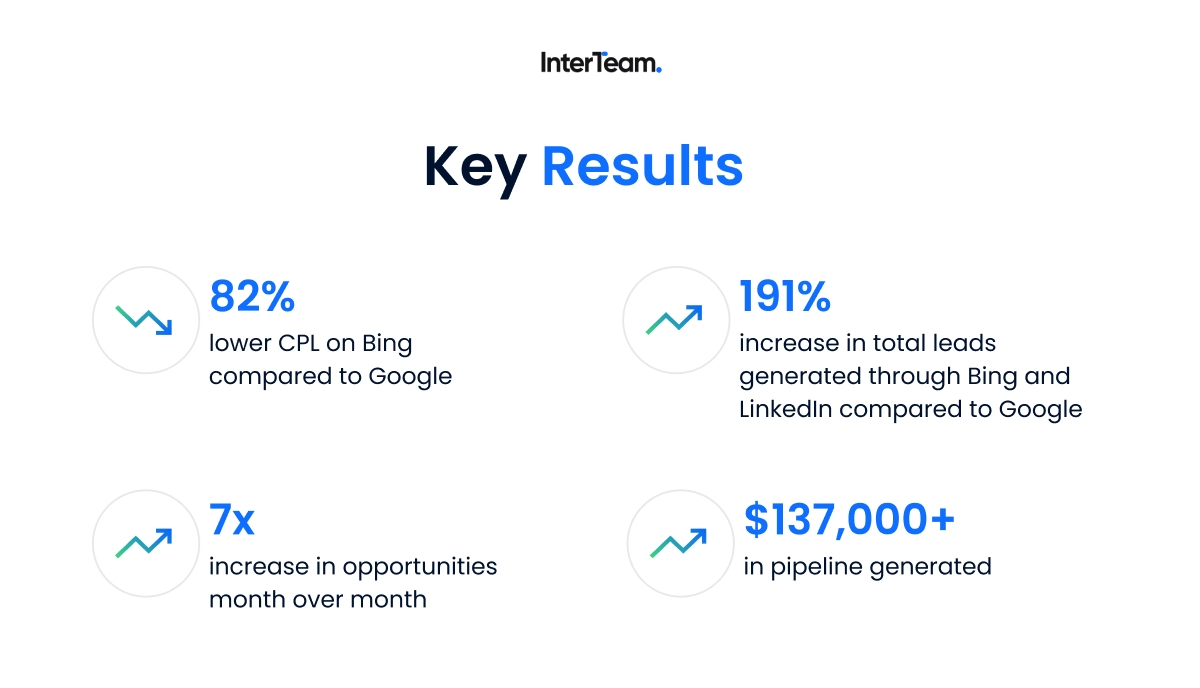
Once Bing and LinkedIn were fully set up as part of a cross-channel advertising strategy, we saw an immediate lift in both lead volume and sales opportunities.
Key results included:
- 82% lower CPL on Bing compared to Google
- 191% increase in total leads generated through Bing and LinkedIn compared to Google
- 7x increase in opportunities month over month
- Over $137,000 in pipeline generated
Work With A B2B Healthcare Marketing Expert
We helped Empeon scale lead generation in a highly competitive healthcare SaaS market where other agencies had fallen short.
By restructuring their PPC strategy and shifting to the right channels, we increased lead volume by 191%, reduced CPLs by 42%, and drove a 7x increase in sales opportunities month over month.
Book a free strategy call to learn how we can help you scale growth in a competitive market.
FAQs

Template question
Template text answer